Popular Sports in Uttarakhand
Popular sports in Uttarakhand include football (the official state sport), cricket, mountaineering and rock climbing, race walking, and a wide range of Himalayan adventure sports such as river rafting, skiing, and paragliding. Traditional games like Kabaddi, Gulli Danda, Kho-Kho, and Rassa Kashi (tug-of-war) also remain deeply popular across the state's villages and schools.
Popular Sports in Uttarakhand: A Sporting Culture Shaped by Mountains and Rivers
Uttarakhand's sporting identity is shaped by its unique geography a state where the Himalayas rise on one side and the Ganga and Yamuna rivers cut through valleys on the other. This combination has given the state a sporting culture unlike almost anywhere else in India: a passion for conventional team sports like football and cricket, a booming Himalayan adventure sports industry, a strong mountaineering tradition, and a deep well of village level traditional games that have been played for generations.
Football: The State's Official Sport
Football holds a special place in Uttarakhand, having been officially declared the state's sport in 2011. Its roots go back to the British colonial era, when troops stationed in Dehradun popularised the game locally. The Dehradun District Sports Association, formed in 1937, helped institutionalise the sport, and Dehradun was declared a major footballing centre in 1966 after the Gorkha Brigade won the prestigious Durand Cup.
Today, the state fields a team in the Santosh Trophy, India's premier inter state football competition, and hosts its own state level competition, the Uttarakhand Super League, alongside more than a dozen active local football clubs in Dehradun alone.
Cricket: A Nationwide Passion, a Local Favourite
Like the rest of India, cricket enjoys massive popularity in Uttarakhand, played everywhere from school grounds to the Rajiv Gandhi International Cricket Stadium-adjacent grounds in Dehradun. The state's cricket profile has grown considerably in recent years, most notably through wicketkeepe batter Rishabh Pant, who hails from Roorkee, Uttarakhand, and has gone on to become one of India's biggest international cricket stars. The Uttarakhand Cricket Association also fields a Ranji Trophy team, giving domestic cricketers from the state a competitive pathway.
Traditional Games: Connecting Generations Through Play
Alongside modern sports, Uttarakhand has a rich collection of traditional games passed down through generations, especially popular in the state's villages and among schoolchildren.
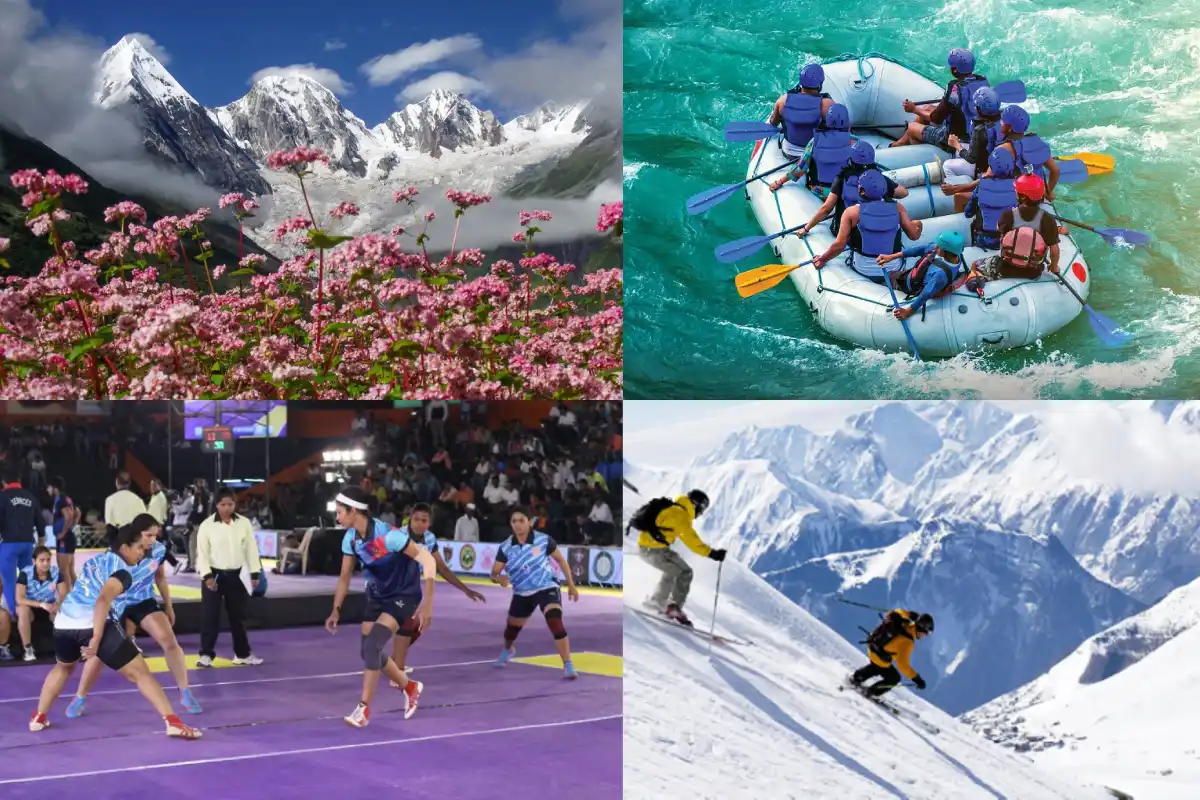
- Kabaddi: A highly popular team sport in which players display strength, agility, and strategy while tagging opponents and holding their breath.
- Gulli Danda: An age old precision game involving striking a small stick into the air using a larger one.
- Kho-Kho: A classic chasing game where two teams take turns pursuing and tagging the opposing side's players.
- Rassa Kashi (Tug-of-War): A test of collective strength and teamwork, often played during festivals and special occasions.
- Langdi Taang: A tag based game requiring players to hop on one leg while trying to tag opponents, testing balance and speed.
Mountaineering: The Original Uttarakhand Sport
Given that the Garhwal and Kumaon regions form a substantial part of the Himalayas, mountaineering is arguably Uttarakhand's most historically significant sport. The state is home to the Nehru Institute of Mountaineering (NIM) in Uttarkashi, one of India's premier training institutions for the discipline, which produced Bachendri Pal, the first Indian woman to summit Mount Everest, in 1984.
Peaks such as Nanda Devi, Trishul, Bandarpunch, and Panchachuli continue to draw mountaineers from across the world, while destinations like Mukteshwar, Ramnagar, New Tehri, and Dhanaulti have become popular hubs for rock climbing.
Race Walking: An Emerging Olympic Pipeline
In recent years, race walking has quietly become one of Uttarakhand's most successful competitive sports at the international level. The hill districts of Chamoli in particular have produced a cluster of Olympic level race walkers, including Manish Singh Rawat (2016 Rio Olympics) and Paramjeet Singh Bisht (2024 Paris Olympics), alongside fellow state athletes like Suraj Panwar a pipeline widely credited to the natural endurance built by daily walking on the region's steep mountain terrain.
Winter Sports: Skiing at India's Winter Capital
Auli, nestled in Chamoli district, is widely regarded as India's premier skiing destination and is often called the country's “skiing capital.” It hosted the first South Asian Federation (SAF) Winter Games in 2011 and offers 7 day and 14 day skiing courses run by the Garhwal Mandal Vikas Nigam (GMVN). Other popular skiing spots include Mundali, Dayara Bugyal, Munsiyari, and Kedarkantha, while snowboarding and sledging have also gained popularity among winter tourists.
Water Adventure Sports: Rafting the Ganga
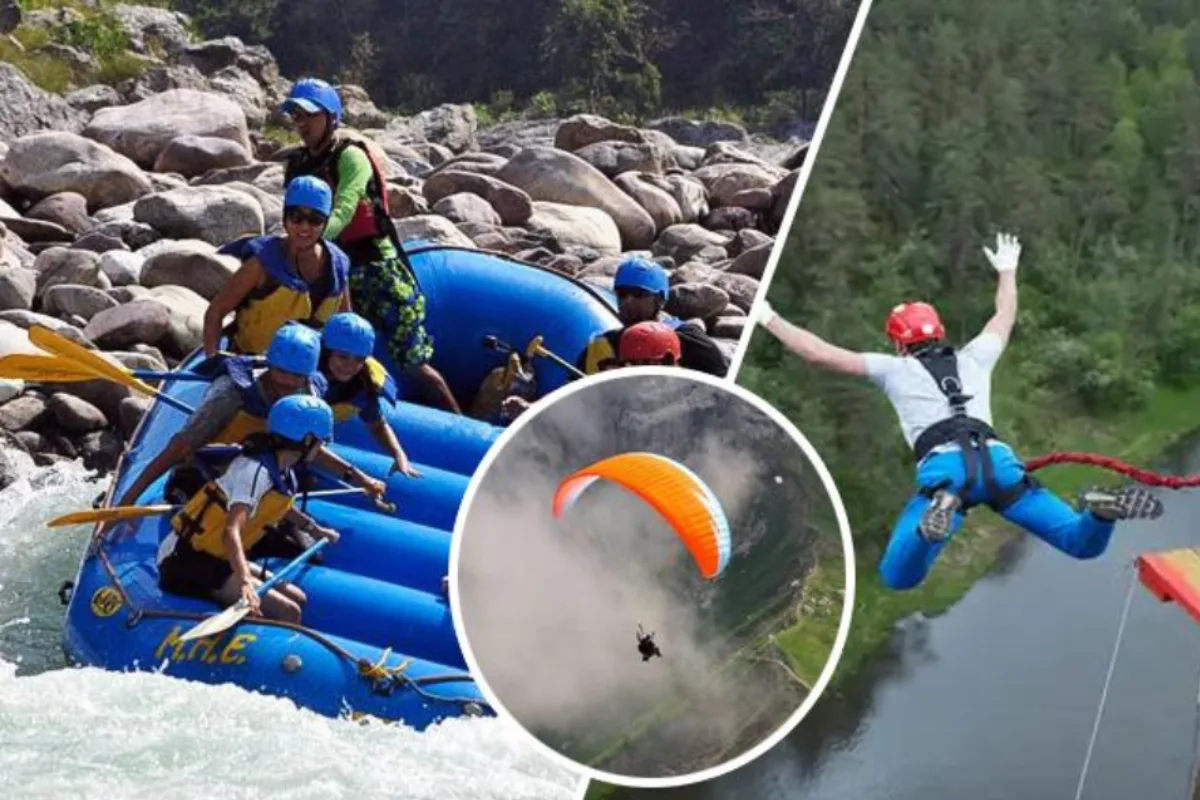
Rishikesh has become North India's main centre for white water rafting, drawing thousands of tourists and adventure seekers to navigate the rapids of the Ganga and Yamuna rivers each year. Kayaking and canoeing are also popular among more experienced adventure sport enthusiasts along the same stretches of river.
Aerial & Thrill Sports: Paragliding, Bungee Jumping & Zip Lining
Paragliding has grown rapidly in popularity across Mukteshwar, Ranikhet, Bhimtal, and Nainital, offering tandem flights over the Himalayan foothills for beginners and experienced flyers alike. Rishikesh, meanwhile, is home to India's highest bungee jump at Jumpin Heights, standing 83 feet tall and operated with jumpmasters trained in New Zealand making it one of the most sought after bungee jumping spots in the country. Zip lining across the Ganga is another popular thrill activity that has grown among both domestic and international visitors.
Quick Reference: Top Sports & Where to Experience Them
| Sport | Category | Best Location(s) | Best Season |
|---|---|---|---|
| Football | State Sport | Dehradun, Haldwani | Year-round |
| Cricket | Team Sport | Dehradun, Roorkee | Year-round |
| Mountaineering | Adventure / Competitive | Uttarkashi, Nanda Devi, Chamoli | April-June, Sept-Oct |
| Race Walking | Athletics | Chamoli district | Year-round training |
| Skiing | Winter Sport | Auli, Kedarkantha, Munsiyari | End Dec-March |
| River Rafting | Water Adventure | Rishikesh | Sept-June |
| Paragliding | Aerial Adventure | Mukteshwar, Ranikhet, Bhimtal | May-September |
| Bungee Jumping | Thrill Sport | Mohan Chatti, Rishikesh | Oct-April |
| Kabaddi / Kho-Kho | Traditional Sport | Statewide (villages & schools) | Year-round |
Other Growing Sports
Badminton has a dedicated following through the Uttarakhand State Badminton Association, which organises coaching camps and tournaments across schools, colleges, and universities. Ice hockey has also been steadily gaining ground, aided by Dehradun's artificial ice rink, which hosts national and international matches through the Ice Hockey Association of Uttarakhand.
These growing sporting opportunities are supported by state level planning, athlete development programmes, and infrastructure initiatives led by the Uttarakhand Sports Department.
In more recent years, combat sports have also begun making headlines, with fighters like Digamber Singh Rawat and Anshul Jubli carrying Uttarakhand's name into MMA and the UFC a sign of the state's sporting culture continuing to diversify well beyond its traditional strengths.
Why Popular Sports in Uttarakhand Reflect the State's Diversity
Popular sports in Uttarakhand stand out for their sheer range.
It reflects:
- A rare blend of mainstream team sports, traditional village games, and world class adventure tourism within a single state
- A natural training ground that has produced Olympic mountaineers, race walkers, and increasingly, combat sports athletes
- A growing adventure sports economy that has made Uttarakhand one of India's top destinations for rafting, skiing, and paragliding
From a Kabaddi match in a Garhwal village to a paraglider soaring above Bhimtal, popular sports in Uttarakhand reflect a sporting culture that continues to be as varied as its landscape and just as deeply rooted in its identity.