
Madhumita Bisht: India's "Iron Lady" Who Dominated Every Discipline
Madhumita Bisht (born Madhumita Goswami on 5 October 1964) is a former Indian badminton player whose near three decade career made her one of the most decorated shuttlers the country has produced. She won the National women's singles title eight times, the doubles title nine times, and the mixed doubles crown twelve times, represented India at the 1992 Barcelona Olympics, and won bronze medals at two separate Asian Games. Her achievements earned her the Arjuna Award in 1982 and the Padma Shri, India's fourth highest civilian honour, in 2006.
Who Is Madhumita Bisht?
Long before India's modern badminton stars filled stadiums and prime-time television slots, Madhumita Bisht was quietly building one of the most complete résumés in the sport's Indian history. Across singles, doubles, and mixed doubles, she collected national titles almost at will for close to three decades, a level of sustained dominance across every discipline that few Indian shuttlers, before or since, have matched.
Known within Indian badminton circles as the "Iron Lady" of the sport, Bisht's career is remembered not just for the sheer volume of titles but for the discipline and self-belief that carried her from a small badminton court in North Bengal to the Olympic stage in Barcelona.
Early Life: Learning the Game From Her Father
Bisht was born Madhumita Goswami on 5 October 1964 in Jalpaiguri, West Bengal, and grew up in nearby Siliguri, where she received her earliest lessons in badminton from her own father. He was, by her own account, deeply invested in her development to the point of personally repairing the cemented floor of the local badminton court so that her practice sessions were never interrupted, and instilling in her the belief that "unless you lose, you'll not know what it takes to win."
That grounding paid off quickly. In 1977, still a young sub-junior, Bisht became the National sub-junior badminton champion of India her first taste of a winner's podium that would become a familiar place for her over the following 25 years. She joined the South Eastern Railways at the age of just thirteen years and seven months, beginning a long association with Indian Railways that would shape both her competitive career and, later, her coaching one.
- Born: Madhumita Goswami, 5 October 1964, Jalpaiguri, West Bengal
- Playing Style: Right-handed
- Disciplines: Women's singles, women's doubles, mixed doubles
- Highest World Ranking: 28 (1992)
Two Decades of National Dominance
What separates Bisht from most Indian badminton players of her era is the sheer breadth of her success. Over a career spanning close to three decades, she won India's National women's singles title eight times, the women's doubles title nine times partnering different players including Ami Ghia, Mallika Barua, Sudha Padmanabhan, and P.V.V. Laxmi over the years and the mixed doubles crown twelve times, alongside partners such as Sanat Mishra, Harjeet Singh, Vinod Kumar, and, on one occasion, her own husband and fellow shuttler, Vikram Singh Bisht.
Winning across all three disciplines, repeatedly, against a constantly changing field of challengers, is what earned her the "queen of Indian badminton" tag among contemporaries and commentators alike. Few Indian players, male or female, have managed to stay at the top of all three formats simultaneously for as long as she did.
International Career: Asian Games Bronze and a Barcelona Olympics Debut
Bisht's success was not confined to domestic Indian badminton. She won a bronze medal at the 1982 Asian Games, the same year she received the Arjuna Award, and was part of India's bronze medal-winning team at the 1998 Asian Games as well a gap of sixteen years between the two medals that speaks to the longevity of her competitive career. She also represented India at the World Cup and Uber Cup team competitions over the years.
Her most significant individual milestone came in 1992, when she became the first Indian woman to compete in badminton at the Olympic Games, representing India in the women's singles event at the Barcelona Olympics the same year she reached her highest career ranking of world No. 28. On the international circuit, she also won a triple crown at the Toulouse Open in France and was a runner-up at the USSR Open, and famously upset then-world No. 2 Kusuma Sarwanta of Indonesia in the second round of the Indonesian Open one of the signature wins of her career against elite international opposition.
Arjuna Award, Padma Shri, and National Recognition
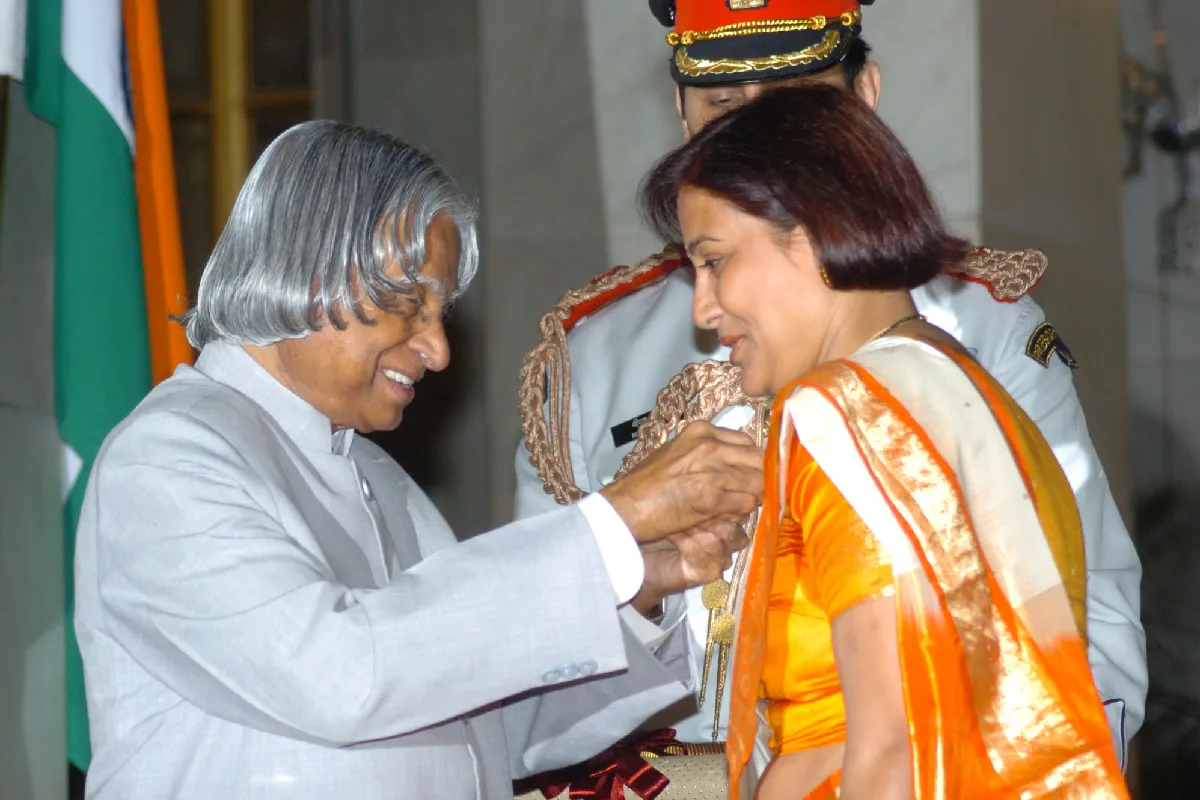
Bisht's achievements were formally recognised twice by the Government of India at the highest level. She received the Arjuna Award in 1982, the year of her first Asian Games medal, and went on to receive the Padma Shri in 2006, India's fourth-highest civilian honour, awarded well after her playing career had ended in acknowledgement of her lasting contribution to Indian badminton.
| Honour / Milestone | Year |
|---|---|
| National Sub-Junior Champion | 1977 |
| Asian Games Bronze (Individual) | 1982 |
| Arjuna Award | 1982 |
| Olympic Debut (Barcelona) | 1992 |
| Asian Games Bronze (Team) | 1998 |
| Retirement from Competitive Play | 2002 |
| Padma Shri | 2006 |
Life After Retirement: Giving Back to the Sport
Bisht retired from active competition in 2002, closing out a career that had begun a quarter of a century earlier as a thirteen-year-old sub-junior champion. Rather than step away from the sport entirely, she moved into coaching and administration, serving as chief coach for her long-time employer, Indian Railways, acting as a government observer, and working with the Sports Authority of India's (SAI) badminton academy to help develop the next generation of Indian shuttlers passing on the same discipline her father once instilled in her on a repaired cement court in Siliguri.
Why Madhumita Bisht's Story Still Matters
- Won 8 National singles, 9 doubles, and 12 mixed doubles titles across a near three decade career
- Became the first Indian woman to compete in Olympic badminton, at the 1992 Barcelona Games
- Won Asian Games bronze medals sixteen years apart, in 1982 and 1998
- Honoured with both the Arjuna Award (1982) and the Padma Shri (2006)
Long before India's badminton boom produced global stars and full stadiums, Madhumita Bisht was proving, title after title, that Indian shuttlers could compete with and beat the best in the world. Her legacy lives on not just in her medal cabinet, but in the generations of players she went on to coach after hanging up her racket.
Read the full record of her career on Wikipedia, or explore more legendary sportspersons from Uttarakhand and stories like Unmukt Chand's journey from India to the USA.