
General Bipin Rawat: India's First Chief of Defence Staff
General Bipin Rawat was India's first Chief of Defence Staff (CDS), a post he held from 31 December 2019 until his death on 8 December 2021. Born on 16 March 1958 in Pauri, Garhwal, Uttarakhand, he served as the 27th Chief of Army Staff from 31 December 2016 before becoming CDS. He is remembered as the architect of India's push toward jointness and integration among the Army, Navy and Air Force, and for laying the foundation of India's joint theatre command structure.
Who Was General Bipin Rawat?
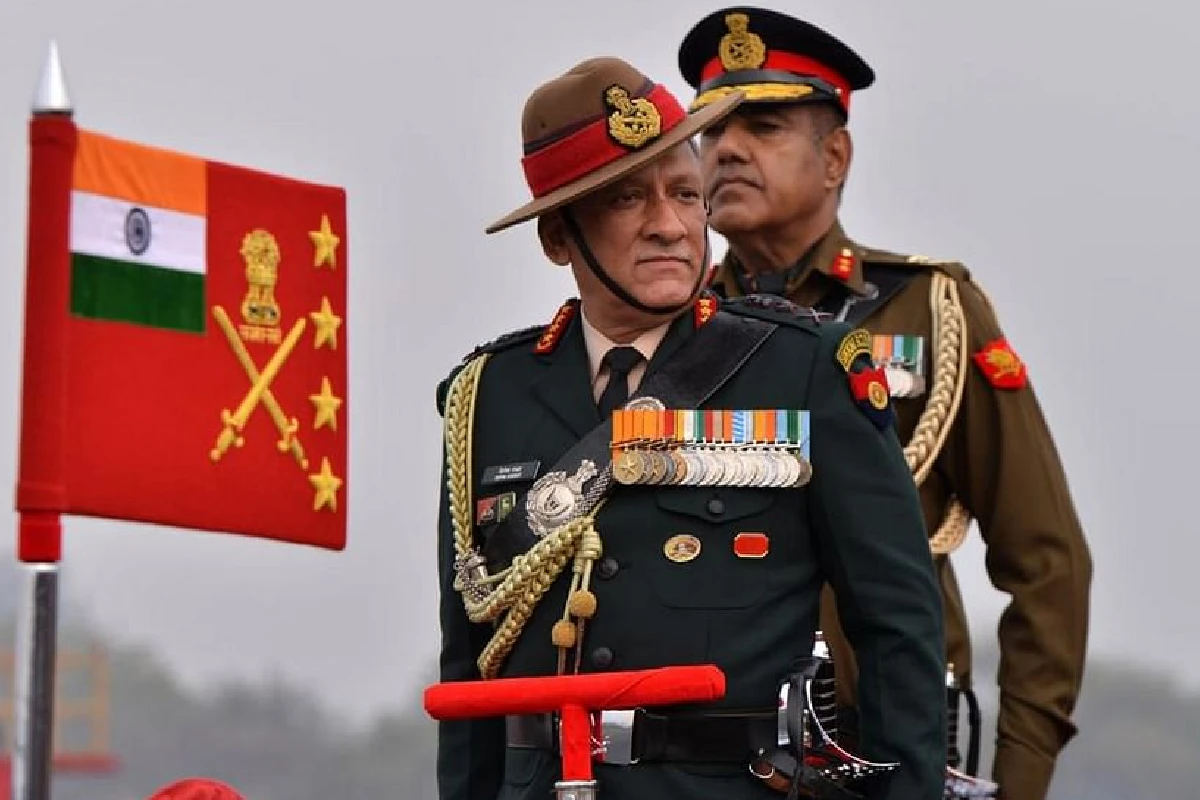
General Bipin Rawat was an Indian Army four-star general who served as the 27th Chief of the Army Staff (COAS) and later became India's first Chief of Defence Staff (CDS). The Government of India appointed him CDS with effect from 31 December 2019, a role created to strengthen coordination and jointness among the three armed services.
Known for his sharp military instincts and no-nonsense approach, General Rawat spent over four decades in uniform, rising from a young infantry officer to the most senior military position ever created in independent India.
His appointment as the first CDS was significant because the post was designed to provide greater coordination between the Army, Navy and Air Force and to support the integration of India's military planning and operations. Soon after taking charge, he began working on issues of inter-service jointness, and in his first meeting with senior officials of Headquarters Integrated Defence Staff in January 2020, he called for recommendations to improve cooperation among the services.
Early Life and Military Background
- Date of Birth: 16 March 1958
- Birthplace: Pauri, Garhwal region, present-day Uttarakhand
- Family Background: Born to Lieutenant General Lakshman Singh Rawat, who also served in the Indian Army
General Rawat received his military education at the National Defence Academy (NDA) and later at the Indian Military Academy (IMA), where he was awarded the Sword of Honour for his outstanding performance as a cadet.
He was commissioned into the Indian Army in December 1978 and joined the 11 Gorkha Rifles, the same regiment in which his father had served a fitting beginning to a career that would eventually take him to the highest levels of India's armed forces.
Military Career: A Timeline of Key Milestones
General Rawat's career included service in several operational and command assignments across some of India's most sensitive regions. Here is a quick timeline of the major milestones:
| Year | Milestone | Details |
|---|---|---|
| 1978 | Commissioned into the Army | Joined 11 Gorkha Rifles, following his father's regiment |
| - | Operational Commands | Served in Uri, Arunachal Pradesh, and along the LoC and LAC |
| - | UN Peacekeeping, DR Congo | Commanded a multinational brigade under the UN mission |
| - | 19 Infantry Division, Uri | Senior command appointment |
| - | GOC, III Corps, Dimapur | Followed by GOC-in-C, Southern Command |
| 2016 | Vice Chief of Army Staff | September 2016 onward, ahead of elevation to Army Chief |
| 31 Dec 2016 | Chief of the Army Staff | Became the 27th COAS, superseding two senior officers |
| 31 Dec 2019 | First Chief of Defence Staff | India's first CDS |
| 8 Dec 2021 | Death | Killed in a helicopter crash near Coonoor, Tamil Nadu |
Bipin Rawat as Chief of the Army Staff
General Bipin Rawat became the Chief of the Army Staff on 31 December 2016. As Army Chief, he led the Indian Army during a period when national security concerns, border challenges and military modernisation remained top priorities.
His tenure coincided with the need to strengthen India's capabilities and improve coordination across the defence establishment. His experience in operational areas and higher military headquarters shaped his approach to preparedness and organisational reform. He served a full three-year term before retiring from the post on 31 December 2019 the same day he was appointed CDS.
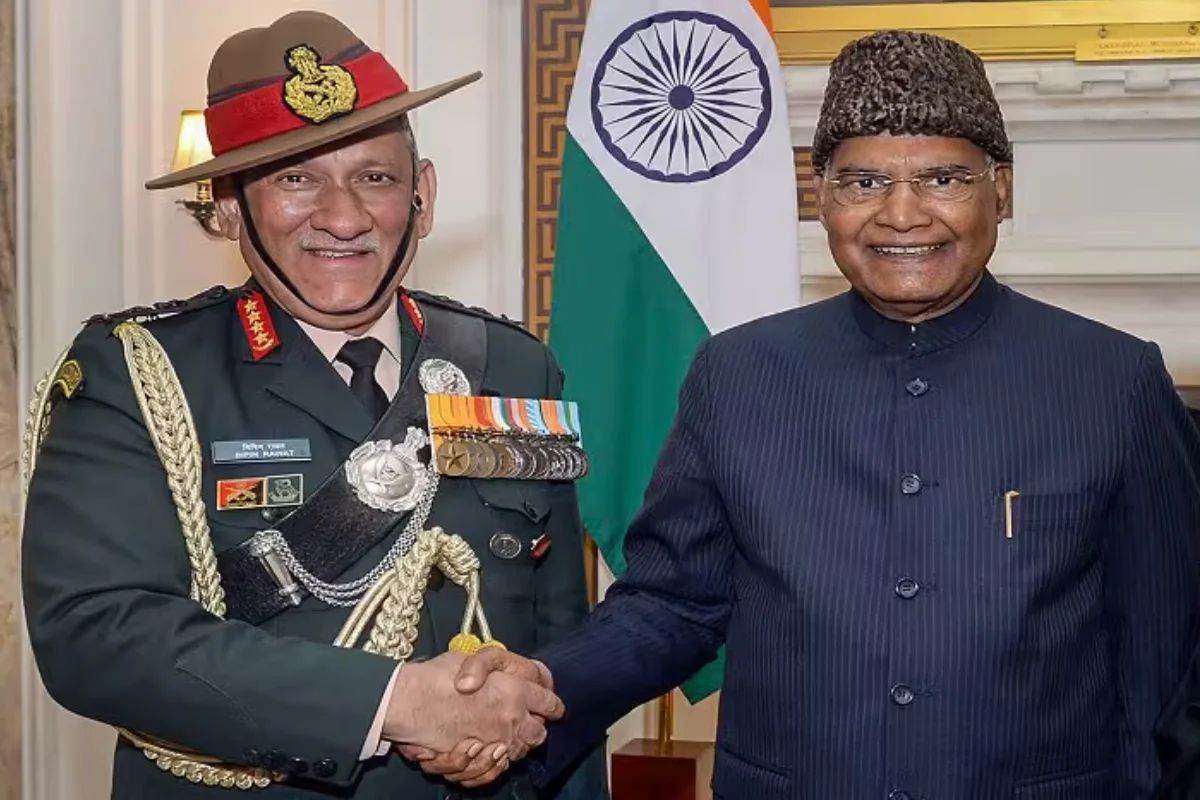
India's First Chief of Defence Staff
The most important chapter of General Rawat's career began when he became India's first Chief of Defence Staff a post recommended over two decades earlier by the Kargil Review Committee, but only created in 2019.
His role centred on jointness, integration, and defence reforms. One of the key areas associated with his tenure was laying the foundation for joint theatre commands, an approach meant to help the armed forces plan and operate together rather than through separate service structures.
The Indian Army later described General Rawat as a leader who initiated far-reaching reforms in the higher defence organisation and helped lay the groundwork for joint theatre commands, while also giving greater impetus to the indigenisation of military equipment. His CDS tenure therefore cannot be seen as simply another career promotion it came at a moment when India was actively reshaping its higher defence management.
Awards and Achievements
General Rawat's decades of service earned him a long list of military decorations:
Param Vishisht Seva Medal (PVSM)
Uttam Yudh Seva Medal (UYSM)
Ati Vishisht Seva Medal (AVSM)
Yudh Seva Medal (YSM)
Sena Medal (SM)
Vishisht Seva Medal (VSM)
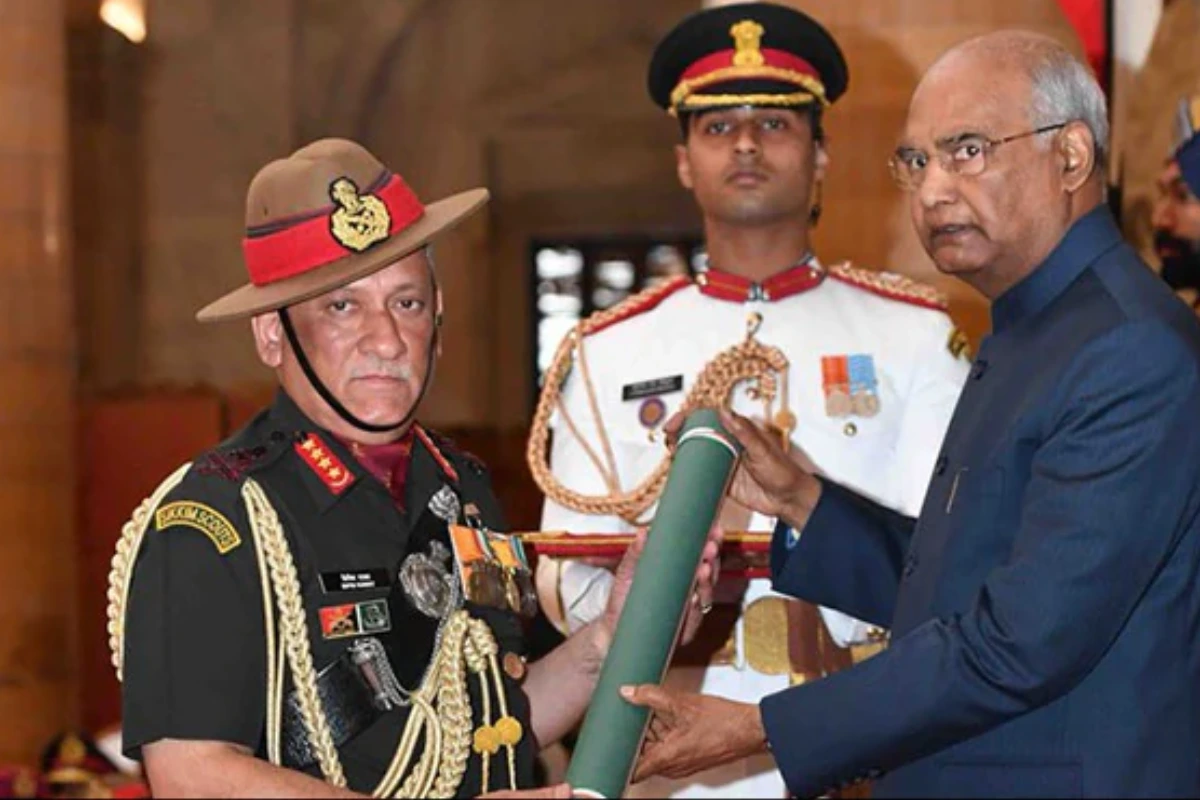
He also held the distinction of ADC (Aide-de-Camp) to the Supreme Commander. In 2022, he was conferred the Padma Vibhushan posthumously India's second-highest civilian award which was received on his behalf by his daughters, Kritika and Tarini Rawat.
His contribution was also formally remembered through the General Bipin Rawat Memorial Chair of Excellence, announced by the Government in 2022 with a focus on jointness and integration, described as a tribute to his leadership and professionalism.
Bipin Rawat Family: Wife and Daughters
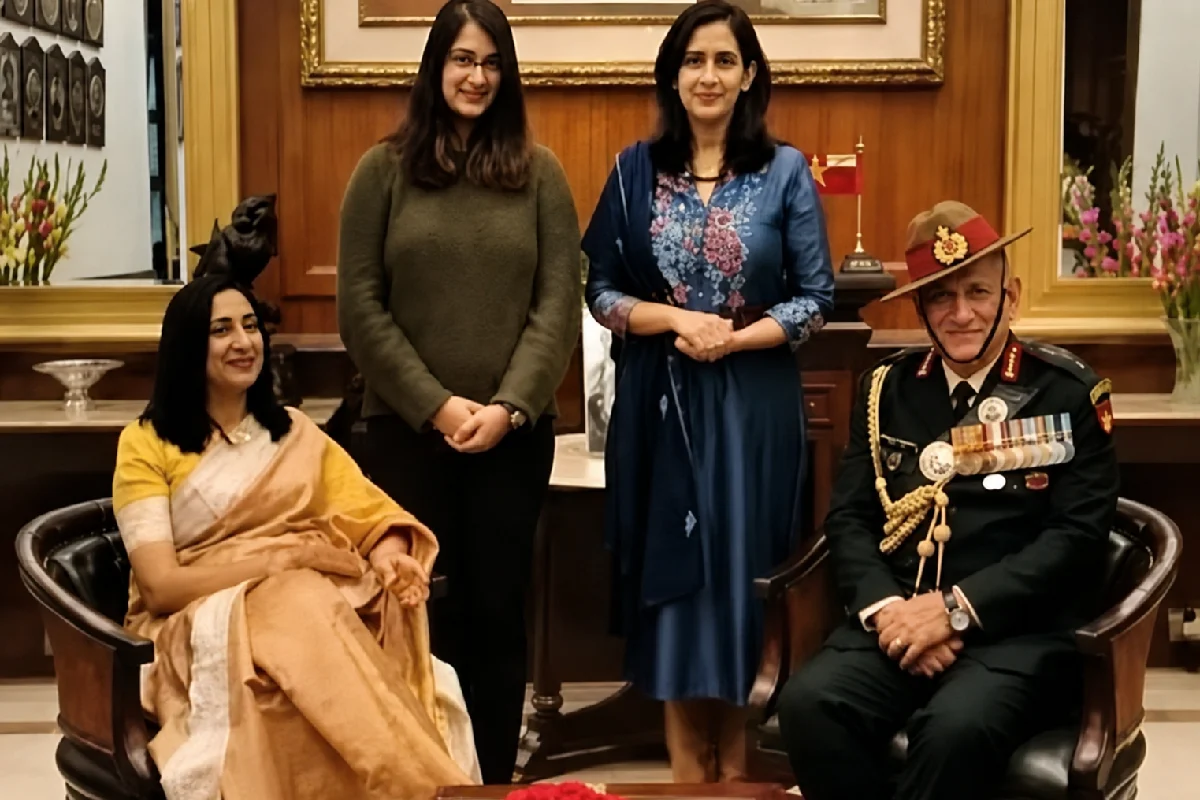
- Wife: Madhulika Rawat, who served as president of the Army Wives Welfare Association (AWWA) and was known for her work with military families
- Daughters: Kritika Rawat and Tarini Rawat
General Rawat came from a family with deep military roots his father, Lieutenant General Lakshman Singh Rawat, also served in the Indian Army, and this early exposure to military life shaped his lifelong commitment to national service.
Death of General Bipin Rawat
General Bipin Rawat's life came to an unexpected end on 8 December 2021. He was travelling in an Indian Air Force Mi-17V5 helicopter when the aircraft crashed near Coonoor, Tamil Nadu, while en route to the Defence Services Staff College, Wellington.
General Rawat died in the crash along with his wife, Madhulika Rawat, and eleven other military personnel. The Indian Army and the Government of India expressed deep sorrow over the loss, calling it a great loss to the nation and highlighting his contribution to reforms in India's higher defence organisation. He was 63 years old.
Why Bipin Rawat Matters Today
- India's first Chief of Defence Staff, a post created to unify the Army, Navy and Air Force under one strategic vision
- 27th Chief of the Army Staff, serving a full three-year term from 2016 to 2019
- Laid the groundwork for joint theatre commands and greater inter-service integration
- Pushed for indigenisation of military equipment during his tenure
- Posthumously honoured with the Padma Vibhushan in 2022
From a young officer of the 11 Gorkha Rifles to India's first Chief of Defence Staff, General Bipin Rawat's career reflects decades of operational command, military leadership, and institutional reform. Because his tenure as CDS ended with his death in December 2021, many of the long-term reforms he helped initiate were left to subsequent military leadership and governments to carry forward his legacy is best understood as part of an ongoing institutional process rather than a completed transformation.
Uttarakhand has given the country several such leaders in national security and public service. NSA Ajit Doval, also from Pauri Garhwal, is another towering figure from the state, currently serving as India's longest-serving National Security Advisor. Read more about IAS officer Naresh Pal Gangwar, from Nainital, Uttarakhand's Secretary of Higher Education.