
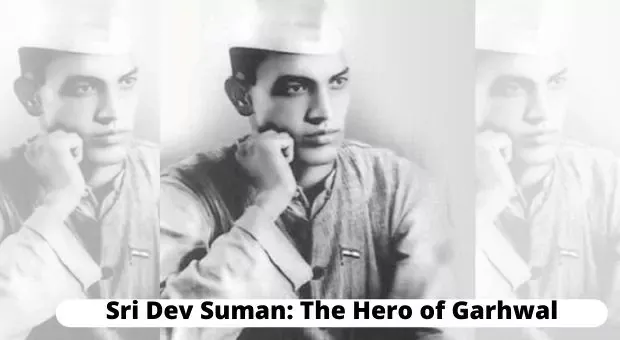
Amar Shaheed Shri Dev Suman
Some names fade with time. Others grow louder with every passing year. Amar Shaheed Shri Dev Suman belongs to the second group. He was a young man from the hills of Garhwal who chose truth over comfort and paid for it with his life. Today, he is remembered as one of Uttarakhand’s bravest freedom fighters, a man whose 84-day hunger strike shook the foundations of a princely state and awakened an entire region.
This article covers his early life, his fight against the Tehri monarchy, his arrest and torture, the historic hunger strike, and the legacy he left behind.
Who Was Amar Shaheed Shri Dev Suman?
Shri Dev Suman was born on 25 May 1916 in Jaul village, Bamund Patti, in the Tehri Garhwal region of present-day Uttarakhand. He was originally named Shri Dutt Badoni. His father, Pandit Hari Ram Badoni, worked as a traditional Ayurvedic physician. His mother, Tara Devi, raised the family after his father passed away when Suman was just three years old.
Life was not easy for the young boy. Yet he completed his early education in Chamba and Tehri, and later studied literature at Punjab University. Even as a teenager, he showed signs of the courage that would define his short life. He reportedly took part in the Namak Satyagraha (Salt March) in 1930, at only 14 years of age.
A Region Under Two Rulers
To understand why Amar Shaheed Shri Dev Suman became a rebel, you need to understand where he grew up. Tehri Garhwal was not directly ruled by the British. Instead, it was a princely state governed by the Panwar (Shah) dynasty, under British paramountcy. So the people of Tehri faced double oppression: colonial control at the national level, and a harsh, autocratic monarchy at the local level.
This local injustice is what pulled Suman into activism.
In 1938, Shri Dev Suman married Vinay Lakshmi Sakalani. Despite his growing political responsibilities, he remained devoted to his family, even as the fight against the Tehri monarchy demanded more and more of his time and safety.
The Fight Against Tehri’s Autocratic Rule
Life under the Tehri monarchy was hard for ordinary villagers. Heavy taxes, forced unpaid labour known as begar, and a complete lack of civil rights were common. There was no space for free speech or political opposition.
Shri Dev Suman could not stay silent. He began organising public meetings, writing for underground publications, and speaking openly against the king’s policies.
Formation of the Tehri Rajya Praja Mandal
On 23 January 1939, Suman co-founded the Tehri Rajya Praja Mandal, a political organisation demanding:
- Civil liberties for the people of Tehri
- Abolition of the forced labour (begar) system
- Responsible and democratic governance
- Unification of the Garhwal region under fair rule
The Praja Mandal quickly became a symbol of resistance. Naturally, this made Suman a target for the king’s administration.
Arrest, Torture, and the Road to Martyrdom
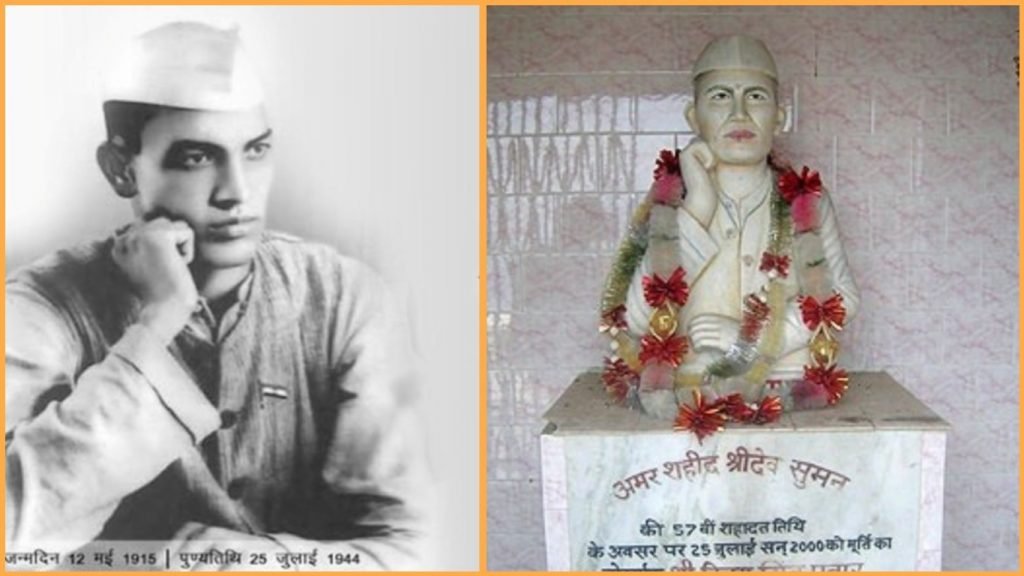
Shri Dev Suman was arrested multiple times through the early 1940s for his political activities. His final arrest came on 30 December 1943, when he was declared a rebel by the Tehri kingdom while staying in his village.
What followed was months of brutal treatment inside the Tehri jail:
- He was made to wear extremely heavy iron cuffs.
- Jailers, including one named Mohan Singh, mixed sand and stones into his food.
- He was denied clean water and basic medical care.
- He was beaten and humiliated repeatedly.
Despite this, Suman refused to give up his demands. He asked for fair treatment, official recognition of the Praja Mandal, and the right to correspond with his family. When the state ignored him, he decided on one final, powerful protest.
The 84-Day Hunger Strike
On 3 May 1944, Amar Shaheed Shri Dev Suman began an indefinite fast unto death inside the jail. This was not a short symbolic gesture. It stretched on for 84 days, becoming one of the longest hunger strikes in India’s freedom movement.
Prison staff tried to force-feed him several times, but he resisted every attempt. Even when the king reportedly offered him freedom in exchange for withdrawing his demands, Suman refused to compromise on the people’s rights.
By this point, he had already spent 209 days in prison, most of it under torture, before starting his fast.
Martyrdom of Amar Shaheed Shri Dev Suman
On 25 July 1944, after 84 gruelling days without food, Shri Dev Suman passed away inside Tehri jail. He was only 28 years old.
In an act of shocking cruelty, his body was thrown into the Bhilangna River without a proper funeral. To this day, his remains have never been found. This final indignity only strengthened public anger against the Tehri monarchy.
News of his death spread quickly across the hills. What had been a local political movement turned into a mass uprising against feudal rule.
Legacy and Lasting Impact
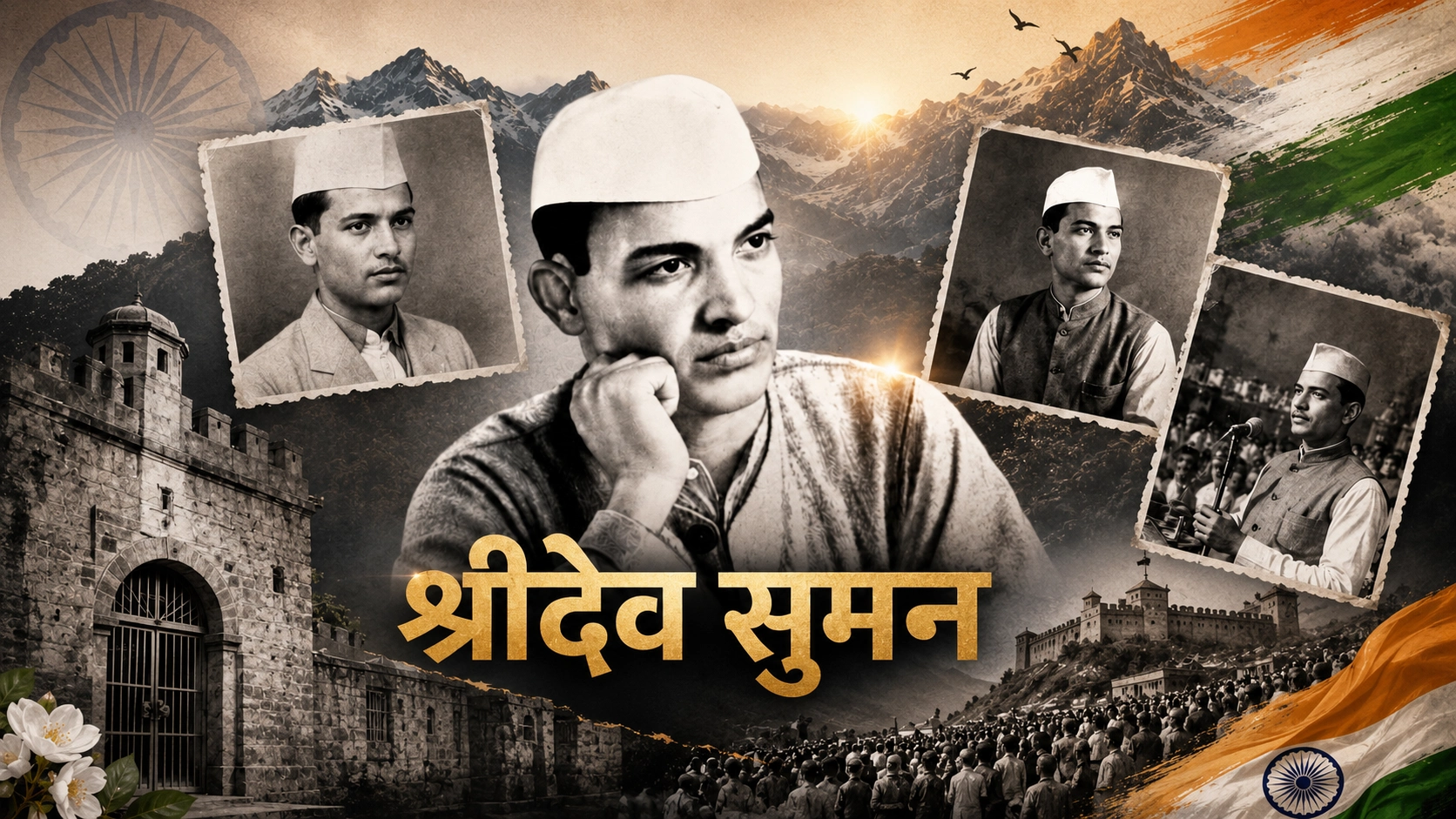
Shri Dev Suman was one of many brave sons of Uttarakhand who gave everything for the freedom of the hills, standing alongside names like Chandra Singh Garhwali, Indramani Badoni, and Badri Datt Pandey. Yet his sacrifice remains one of the most defining chapters of that shared struggle.
The sacrifice of Amar Shaheed Shri Dev Suman did not go in vain. His martyrdom directly fuelled the movement that eventually led to the merger of the Tehri Riyasat with independent India on 1 August 1949, ending more than a century of monarchical rule.
His influence went far beyond his own lifetime:
- He is often credited with introducing Gandhian principles of non-violence to the Garhwal region.
- Legendary environmentalist Sunderlal Bahuguna, who later led the Chipko Movement, was deeply inspired by Suman and considered him a mentor figure.
- His famous words, “The body can be imprisoned, but ideas can never be imprisoned,” are still quoted across Uttarakhand today.
How Uttarakhand Remembers Him Today
Every year on 25 July, his martyrdom day, people across Uttarakhand pay tribute to Amar Shaheed Shri Dev Suman. Schools, colleges, and government institutions in the state have been named after him, including Sri Dev Suman Uttarakhand University. Political leaders, students, and citizens remember his contribution through events, speeches, and social media tributes.
One of the biggest honours is Sri Dev Suman Uttarakhand University, located in Tehri Garhwal, which was named after him to keep his memory alive for future generations of students. This tradition of honouring freedom fighters through education is not unique to him. Uttarakhand’s Hemwati Nandan Bahuguna Garhwal University also carries the name of another son of the hills who fought for the region’s people. Political leaders, students, and citizens also remember Suman’s contribution through events, speeches, and social media tributes on his birth and martyrdom anniversaries.
His story is a reminder that some fights are not about winning power, but about standing firm for what is right, no matter the personal cost.