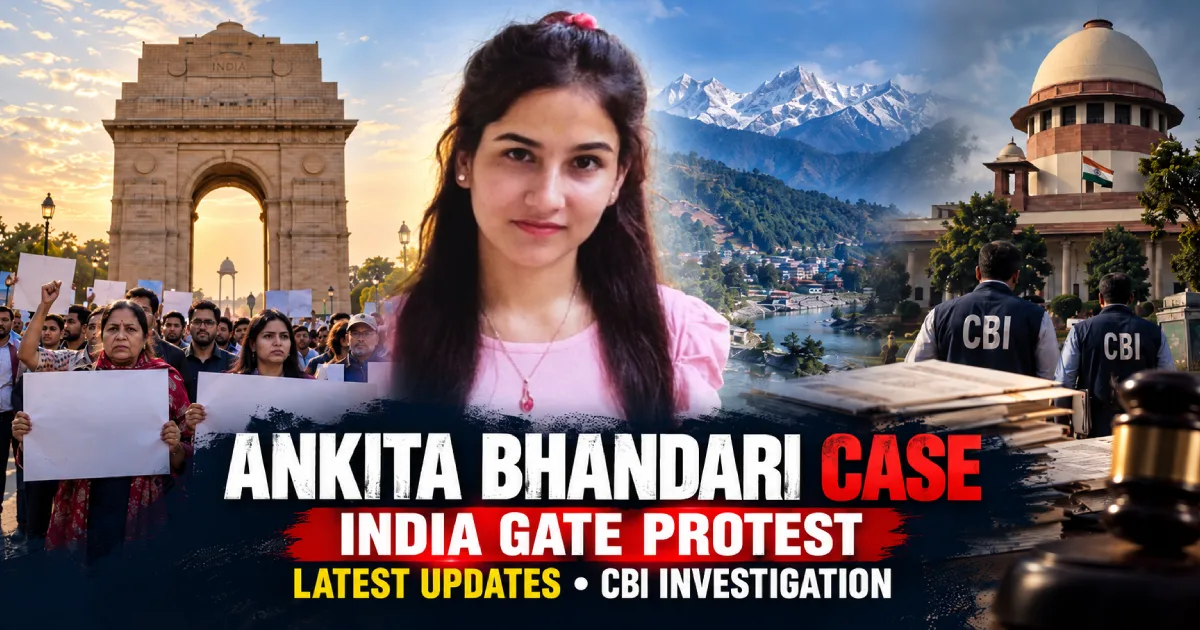
Fact-checked: October 16, 2026 The India Gate protest, Ankita’s background, the murder trial, and the subsequent investigation. Court findings, allegations, and political responses are identified separately.
- Latest update, Who was Ankita?, What happened?, Court verdict, CBI investigation, political responses
Latest Update: India Gate Protest, Detention and Release
The Ankita Bhandari case returned to national attention after her parents staged a protest near India Gate in New Delhi on October 14, 2026. Delhi Police detained them and several other demonstrators early the following morning. Her parents were subsequently released. Reports available on October 16 confirm their release, so describing them as still being in police custody would be inaccurate.
The immediate reason for the protest was opposition to Dushyant Kumar Gautam’s appointment as Sikkim governor. The family wants the appointment put on hold until the CBI investigation connected with the case is completed. Gautam has denied the allegations against him and initiated defamation proceedings. Allegations made by the family must not be confused with a judicial finding of guilt.
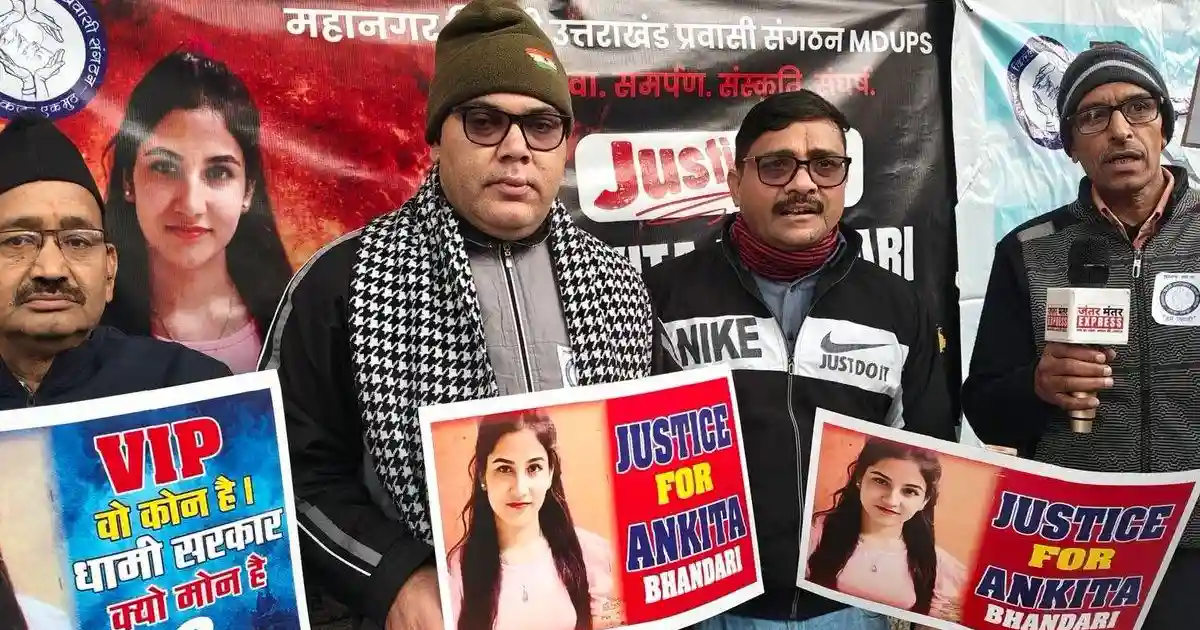
An October 16 report said Ankita’s father had issued a 24-hour ultimatum seeking withdrawal of the appointment and threatened to intensify the movement. That was the family’s announced position; it was not confirmation that the appointment had been cancelled. The developments need to be understood alongside the murder convictions already delivered in 2025.
What Are Ankita Bhandari’s Parents Demanding?
According to reports, Virendra Bhandari and Soni Devi were taken to Tilak Marg police station at approximately 4.30 am on October 15 and released about half an hour later. Her mother said the family would undertake a hunger strike from home if they were not allowed to continue their sit-in. This was a statement of intention, not independent confirmation that a hunger strike had begun.
For the parents, the conviction of three men has not answered every question. They continue to seek scrutiny of the alleged “VIP” reference and any additional responsibility connected with the circumstances of their daughter’s death. Their position concerns the scope of the investigation as well as accountability.
Who Was Ankita Bhandari? Her Village, Parents and Education
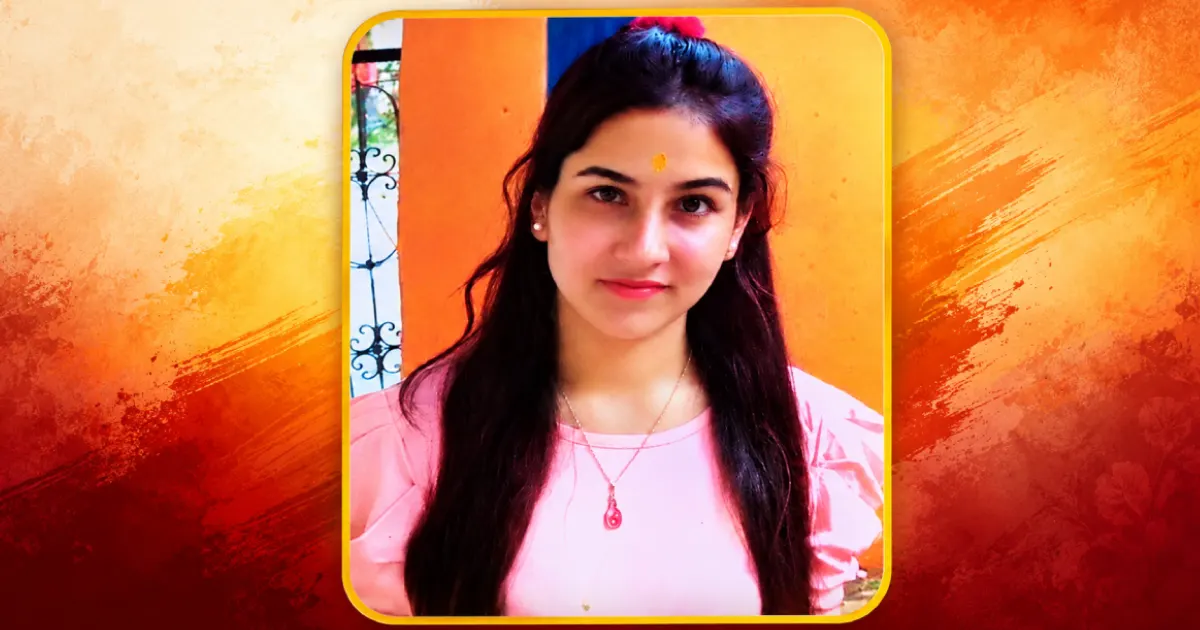
Ankita Bhandari came from a family in Dobh Srikot village in Uttarakhand’s Pauri Garhwal district. Her father is Virendra Singh Bhandari, whose name is also reported as Birendra, and her mother is Soni Devi. Her elder brother is Ajay. The family had limited financial resources but wanted its children to receive a good education.
An October 2022 profile described the family’s move to Pauri town for schooling. Ankita attended Bhagat Ram Modern School and passed her CBSE Class 12 examinations in the commerce stream in 2020 with 89 per cent marks.
She later enrolled in a one-year certificate course at Shri Ram Institute of Hotel Management in Dehradun. Financial difficulties following her father’s loss of work during the Covid period forced her to leave after approximately six months. Describing her as having completed a hotel-management degree would therefore be misleading.
Her Job at Vanantara Resort
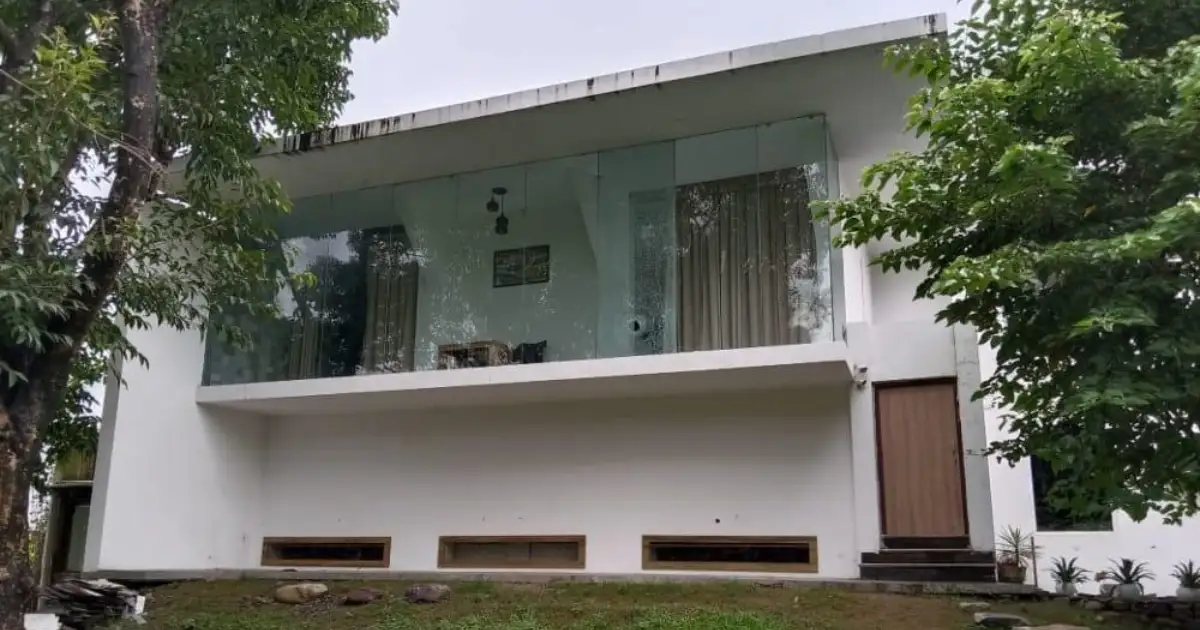
Ankita worked as a receptionist at Vanantara Resort near Rishikesh. The resort was owned by Pulkit Arya. Contemporary reporting mentioned a monthly salary of approximately Rs 10,000. For someone from a financially struggling family, employment in hospitality offered the prospect of earning an income and contributing at home.
The opportunity was followed, within weeks, by the events that became the subject of the murder investigation. The prosecution’s account focused on pressure allegedly placed on her to do things outside the responsibilities of a receptionist.
A receptionist’s employment and a demand to provide personal or sexual services to a guest are entirely different matters. Accepting a job does not constitute consent to exploitation. That distinction is central to understanding the prosecution’s explanation of the dispute without placing responsibility on Ankita for seeking work.
What Happened to Ankita Bhandari, and Why Was She Killed?
The prosecution said Ankita was pressured to provide what was described as “special services” to guests at the resort. She resisted and wanted to leave the job. Messages and witness testimony were used to explain this pressure and the circumstances preceding her death.
According to the prosecution, the accused feared she would reveal what was happening. On the night of September 18, 2022, she was taken out of the resort. The prosecution’s case was that Pulkit Arya and his two associates pushed her into a canal. The trial court subsequently convicted all three of murder.
The case therefore went beyond an unresolved allegation against the three men: it resulted in a judicial finding of guilt. However, the prosecution’s account of pressure at the resort must be distinguished from allegations about the involvement of any particular outside individual.
A reference to a “VIP” does not, by itself, establish the identity or criminal responsibility of a named politician. Claims concerning additional involvement require their own evidence and appropriate investigative or judicial findings.
Where Was Her Body Found? What Did the Post-Mortem Establish?
Ankita’s body was recovered from the Chilla canal in the Rishikesh area on September 24, 2022. The killing was dated to September 18. The six-day interval is important: the date of death and the date of recovery should not be presented as the same event.
Reporting on the provisional post-mortem findings identified drowning as the cause of death and described injuries sustained before death, consistent with blunt-force trauma. These medical findings were considered alongside other evidence in the case.
A medical finding of drowning alone does not distinguish between an accident, suicide and homicide. That question requires examination of the surrounding circumstances. In this case, the court assessed the wider evidentiary record before convicting the three men of murder. Medical terminology should therefore be explained in context rather than used to suggest a conclusion it does not establish on its own.
Who Are Pulkit Arya, Saurabh Bhaskar and Ankit Gupta?
The three men convicted in the main murder case were resort owner Pulkit Arya, manager Saurabh Bhaskar and assistant manager Ankit Gupta. They were accused when arrested in 2022; following the May 2025 judgment, they can accurately be described as convicted in that case.
Pulkit is the son of former BJP leader Vinod Arya. His family’s political connections became a prominent part of public discussion. Saurabh Bhaskar and Ankit Gupta were associated with the resort’s management.
There is an important distinction between two similar names. Ankit Gupta, convicted in the murder case, is not Ankit Arya, Pulkit’s brother. Confusing them would wrongly attribute a criminal conviction to a different person.
The Arya Family’s Political Connections and BJP Action
Vinod Arya had served as chairman of the Uttarakhand Mati Kala Board with the rank of a minister of state. Pulkit’s brother, Ankit Arya, was vice-chairman of the state’s Other Backward Classes Commission. Those positions contributed to questions about influence and institutional accountability after the murder came to light.
On September 24, 2022, the BJP expelled Vinod Arya and Ankit Arya from the party following Pulkit’s arrest. The expulsions are part of the documented political response to the case.
Why Did the Resort Demolition Become Controversial?
The demolition of part of the resort after the case became public raised questions about the preservation of evidence. Ankita’s father expressed concern that material relevant to the investigation could have been destroyed. Altering a potential crime scene before an investigation is complete naturally attracts scrutiny.
The police offered a different account. Then Uttarakhand director general of police Ashok Kumar said the rooms, including the one occupied by Ankita, had been videographed. The police maintained that necessary evidence had been preserved.
Both positions are important to the record. The family’s concern should not be presented as a final judicial finding that evidence was deliberately destroyed. Equally, the police assurance explains the official response without erasing the questions raised about the timing and authorisation of the demolition.
From Revenue Police to the SIT Investigation
The initial response to Ankita’s disappearance and the area’s revenue-police arrangements became another source of controversy. The case was transferred to the regular police in September 2022, and a Special Investigation Team, or SIT, investigated it. Public concern extended beyond the eventual arrests to what happened in the first days after she disappeared.
At an October 15, 2026 briefing, Additional Director General of Police V. Murugesan described the investigation as having been completed in 88 days, followed by a chargesheet of approximately 500 pages. He also highlighted the speed of the arrests once the regular police acted.
Official references to arrests “within 24 hours” should not be read as meaning the suspects were arrested the day after the September 18 killing. The incident, transfer of the case and September 23 arrests occurred at different points. Keeping those dates distinct allows readers to assess both the initial response and the subsequent investigation.
The Trial and the May 30, 2025 Life-Imprisonment Verdict
The first hearing was reported to have begun on January 30, 2023. After charges were framed, prosecution testimony began on March 28, 2023. Forty-seven witnesses, including the investigating officer, were examined during the proceedings. Final arguments took place in May 2025.
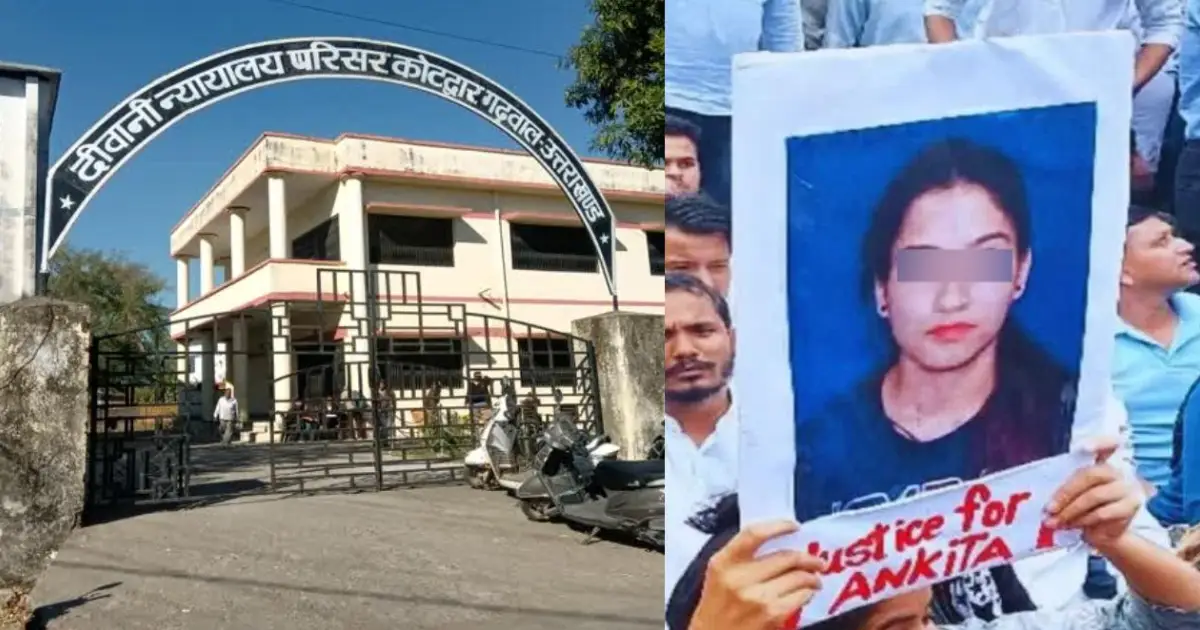
On May 30, 2025, Additional District and Sessions Judge Reena Negi’s court in Kotdwar sentenced Pulkit Arya, Saurabh Bhaskar and Ankit Gupta to life imprisonment. The family had sought the death penalty, but the sentence imposed was life imprisonment. The punishment requested by relatives and the punishment ordered by a court must not be confused.
This was an important trial-court judgment. It should not be described as a final Supreme Court decision. The material checked for this article did not establish a final order overturning the convictions. Any later account of appellate proceedings should identify the court, date and actual terms of the relevant order rather than relying on an ambiguous headline.
What Evidence Led to the Convictions?
Reports of the trial identified WhatsApp messages, witness statements, CCTV material and medical findings among the evidence considered. The prosecution used messages to demonstrate pressure at work and Ankita’s wish to leave. The circumstances in which she was last seen with the accused also formed part of its case.
The defence maintained that she had died by suicide. The prosecution relied on a chain of circumstantial evidence. Although there was no direct eyewitness to the killing, the court assessed the circumstances together and convicted the three men.
The verdict cannot accurately be reduced to a single viral message. The significance of any one item depends on how it relates to the rest of the evidence. Similarly, the absence of a direct eyewitness does not, on its own, resolve a case in favour of innocence. The trial involved competing accounts and judicial assessment of the material presented.
Why Was a CBI Investigation Sought After the Convictions?
The family and campaigners continued to seek investigation into the alleged “VIP” reference and possible additional responsibility. In January 2026, following renewed protests, Chief Minister Pushkar Singh Dhami recommended a CBI investigation. Reports in February said the central agency had registered a fresh case.
This development concerned an additional line of inquiry that the family believed had not been adequately answered. Registration of a case is not the same as establishing a named person’s guilt. Nor does opening another investigation automatically cancel the convictions in the original murder trial.
As of the October 16 review for this article, no verified final public finding from that additional investigation was available that would justify declaring another individual guilty. A claim that the “VIP’s identity has been proved” therefore requires evidence beyond political speeches, circulating recordings or social-media assertions. The relevant investigative findings and court orders remain the documents to watch.
Dushyant Gautam’s Denial and the Delhi High Court Order
Dushyant Kumar Gautam has denied allegations linking him to the case. In defamation proceedings brought on his behalf, his legal team argued that the accusations were unsubstantiated. The Delhi High Court’s January 7, 2026 order is an important part of that context.
Justice Mini Pushkarna found a prima facie case for interim protection and restrained the relevant defendants from publishing material identifying or insinuating that Gautam was the alleged “VIP”. The order also directed removal of specified posts and videos. The proceedings involved Congress, AAP and other parties to the suit.
This was an interim order in a defamation matter, not a new conviction in the murder case. It should neither be omitted when reporting the allegations nor presented as the final outcome of the entire criminal investigation. Gautam is discussed here in the context of the protest, his denial and the judicial proceedings, not as someone convicted of Ankita’s murder.
Where Do Congress, UKD and BJP Stand?
Congress: Rahul Gandhi and Priyanka Gandhi met the family at India Gate on October 14. Congress opposed the parents’ detention and supported their demands for investigation and accountability. Reports on October 15 also described Rahul Gandhi writing to the President about the family’s concerns. These are political interventions, not judicial findings against an individual.
Uttarakhand Kranti Dal: UKD has participated in campaigns seeking further investigation and justice for the family. A January 8, 2026 report recorded UKD spokesperson Shanti Bhatt’s presence at a joint campaign platform’s press conference. The platform sought a judicially monitored CBI investigation and called for a January 11 shutdown. This is its documented January position, not a newly verified UKD statement about the October detention.
BJP: State president Mahendra Bhatt defended the Dhami government on October 15, citing police action, the SIT, convictions, steps taken on family requests and Rs 25 lakh in assistance. The party accused Congress of politicising the matter. This records the government and party’s position; it does not independently establish that the family considers its concerns resolved.
What Questions Matter Next?
The most important developments to follow are verified information from the CBI inquiry and further court orders. Which allegations are supported, which are not, and whether any additional responsibility is established cannot be settled through political statements alone. Respect for the family’s demand for answers is compatible with a fair investigation.
For readers, the position should remain clear: three men received life sentences in the main murder case; the family continues to seek additional investigation and accountability; and the parents were released after their detention following the India Gate protest.