
Kargil Vijay Diwas: Honoring The Heroes Who Never Came Back
- Written by: UKSports
- Published on:
- Read Time: 6 min
Kargil Vijay Diwas: Remembering the Courage, Sacrifice and Victory of the 1999 Kargil War
Every year on 26 July, India observes Kargil Vijay Diwas to honour the soldiers who fought in the 1999 Kargil War and remember those who made the supreme sacrifice in defence of the nation. In 2026, India marks the 27th Kargil Vijay Diwas, commemorating a victory achieved in some of the most difficult high-altitude battle conditions faced by the Indian Armed Forces.
The Kargil War was not only a military victory. It became a symbol of courage, determination, leadership and sacrifice. Indian soldiers had to climb steep, exposed mountain slopes, often at night and under enemy fire, to recapture positions located thousands of metres above sea level.
Among the many units that served during Operation Vijay, soldiers of the Garhwal Rifles and Kumaon Regiment also contributed to the campaign, carrying forward Uttarakhand’s long tradition of service in the Indian Armed Forces.
Background of the Kargil War
Operation Vijay: India's Response
India launched Operation Vijay to remove the intruders and restore control over its territory.
Importantly, Indian forces were directed not to cross the Line of Control. This meant the Army had to attack heavily defended positions from the Indian side, even when the terrain placed attacking troops at a significant disadvantage.
The Indian Air Force joined the campaign through Operation Safed Sagar on 26 May 1999, while the Indian Navy was also mobilised as part of India’s overall military response. Additional infantry units, artillery, engineers, equipment and supplies were moved rapidly into the region.
The fighting that followed produced some of the most celebrated battles in modern Indian military history.
Tololing was recaptured on 13 June, providing an important breakthrough in the Dras sector. Tiger Hill was recaptured on 4 July, becoming one of the defining victories of the campaign. Fierce battles were also fought for Point 4875 and across Batalik, Mushkoh and other sectors.
Soldiers frequently climbed steep mountain faces during darkness, carrying weapons and equipment in freezing temperatures and thin air while enemy positions above them could observe and fire upon their approach.
Yet, position after position was reclaimed.
By 26 July 1999, the operation had achieved its objective, and the date became forever associated with India’s Kargil victory. Official Ministry of Defence records have stated that 527 Indian soldiers were martyred during the conflict.
Role of the Garhwal Rifles in the Kargil War
17 Garhwal Rifles in Batalik
The 17th Battalion, Garhwal Rifles, was deployed in the challenging Batalik sub-sector.
On the night of 29 June 1999, the battalion began attacks against positions around the Jubar Ridge, including Kalapathar and the Bumps. The attacking soldiers faced machine-gun fire, artillery and extremely difficult mountain terrain.
One of the best-known heroes of the battalion was Captain Jintu Gogoi. Leading his platoon towards Kalapathar, he and his men fought despite being surrounded and outnumbered. Captain Gogoi was mortally wounded during the action and was subsequently awarded the Vir Chakra posthumously.
The battalion continued fighting after his sacrifice. It recaptured Kalapathar, secured the Bumps and successfully assaulted Point 5285 by 9 July. For its actions during the conflict, 17 Garhwal Rifles received the Battle Honour “Batalik” and Theatre Honour “Kargil”.
18 Garhwal Rifles and the Battle for Point 4700
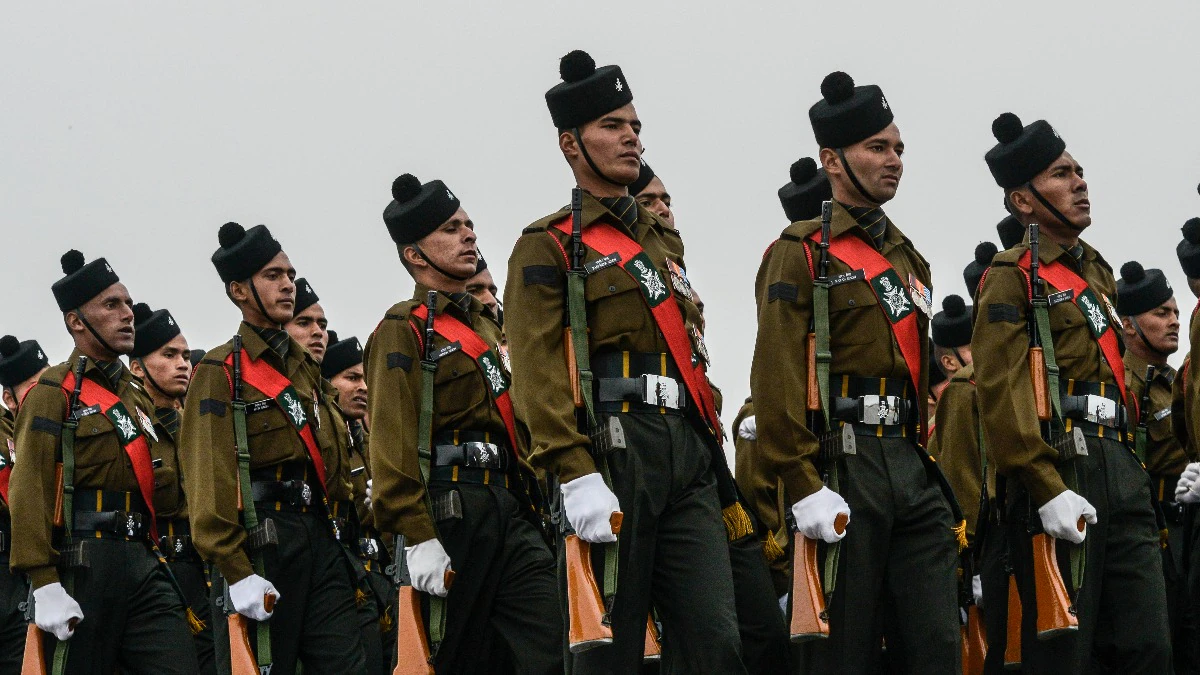
The 18th Battalion, Garhwal Rifles, distinguished itself in the Dras sector, particularly during the operations for Point 4700 and adjoining positions.
After Indian successes at Tololing and Point 5140, enemy troops had strengthened their positions around Point 4700. On 28 June, 18 Garhwal Rifles launched its assault.
Among those who displayed extraordinary courage was Captain Sumeet Roy, who led his men along a dangerous route to surprise an enemy position. Fighting followed at close quarters, helping open the way for the battalion’s advance on Point 4700.
Captain Roy was later fatally wounded by enemy artillery fire. Major Rajesh Sah, Lieutenant M.V. Sooraj, Naik Kashmir Singh, Rifleman Kuldeep Singh and Rifleman Anusuya Prasad were among other soldiers recognised for their courage. Six personnel of the battalion received the Vir Chakra, and 18 Garhwal Rifles earned the Battle Honour “Dras”, Theatre Honour “Kargil” and a Chief of Army Staff Unit Citation for its performance.
The contribution of the Garhwal Rifles came at a heavy price, with soldiers giving their lives on the mountains they had been ordered to reclaim.
Role of the Kumaon Regiment in Operation Vijay
The Kumaon Regiment, another regiment with deep historical and military connections to Uttarakhand, was also deployed during Operation Vijay.
Regimental histories record that Kumaon units operated in the Kargil theatre to help remove Pakistani forces occupying Indian positions. Working in difficult high-altitude terrain and hostile weather, Kumaon soldiers participated in operations to clear and secure important mountain features, and personnel from the regiment received gallantry recognition for their service during the campaign.
The contribution in Kargil added another chapter to a much longer military tradition. The Kumaon Regiment had previously distinguished itself in battles ranging from the defence of Kashmir in 1947-48 to the legendary Battle of Rezang La in 1962, and its soldiers continued that tradition of service during Operation Vijay.
While individual battles such as Tololing, Tiger Hill or Point 4875 often dominate popular accounts of Kargil, victory was the result of the combined work of numerous infantry battalions, artillery units, engineers, logistics personnel and air and naval forces operating together. The Kumaon Regiment formed part of that larger national effort.
Uttarakhand's Proud Military Legacy
The role of the Garhwal Rifles and Kumaon Regiment gives Kargil Vijay Diwas particular emotional significance for Uttarakhand.
For generations, families from the mountains of Garhwal and Kumaon have sent their sons and daughters to serve in India’s Armed Forces. The courage displayed during Kargil continued that tradition.
The story of soldiers climbing icy mountain faces carrying weapons, ammunition and supplies is also a story of resilience shaped by a lifetime in the mountains. Their contribution reminds us that behind every military victory are families, communities and villages whose sacrifices continue long after a battle has ended.
Why Kargil Vijay Diwas Must Be Remembered
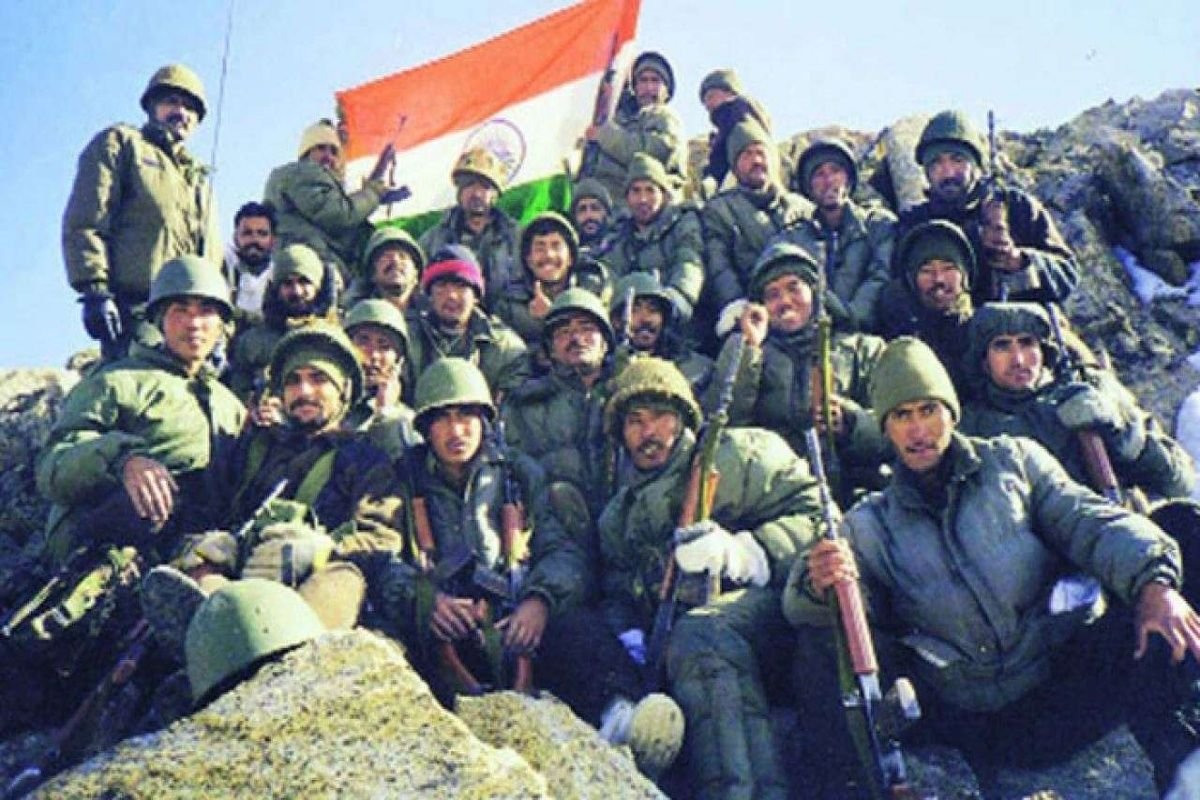
Kargil Vijay Diwas is more than a celebration of victory.
It is a day to remember the soldiers who never returned home, those who were wounded, the families who lost loved ones, and the thousands of personnel who performed their duties under extraordinary circumstances.
Kargil also demonstrated the importance of preparedness, intelligence, coordination, logistics and high-altitude warfare capability. The conflict subsequently influenced India’s thinking on military preparedness and defence reforms.
Twenty-seven years later, the mountains of Kargil continue to tell a story of courage.
From Tololing and Tiger Hill to Point 4700, Kalapathar and the heights of Batalik, each position represents soldiers who chose duty despite impossible odds.
On Kargil Vijay Diwas, India remembers all of them.
For Uttarakhand, it is also an occasion to remember with pride the soldiers of the Garhwal Rifles, Kumaon Regiment and every Uttarakhandi soldier who served during Operation Vijay.
Their courage belongs not only to military history but to generations yet to come.
Jai Hind.
Beyond Kargil: Remembering Rifleman Jaswant Singh Rawat, Hero of the 1962 War
Serving with 4 Garhwal Rifles, he fought bravely during the 1962 Indo-China War at Nuranang in Arunachal Pradesh.
His actions against advancing Chinese forces became a powerful example of courage, duty, and sacrifice.
He was posthumously awarded the Maha Vir Chakra for his gallantry.
His legacy continues to inspire generations of soldiers and is honoured at Jaswant Garh near Tawang.