
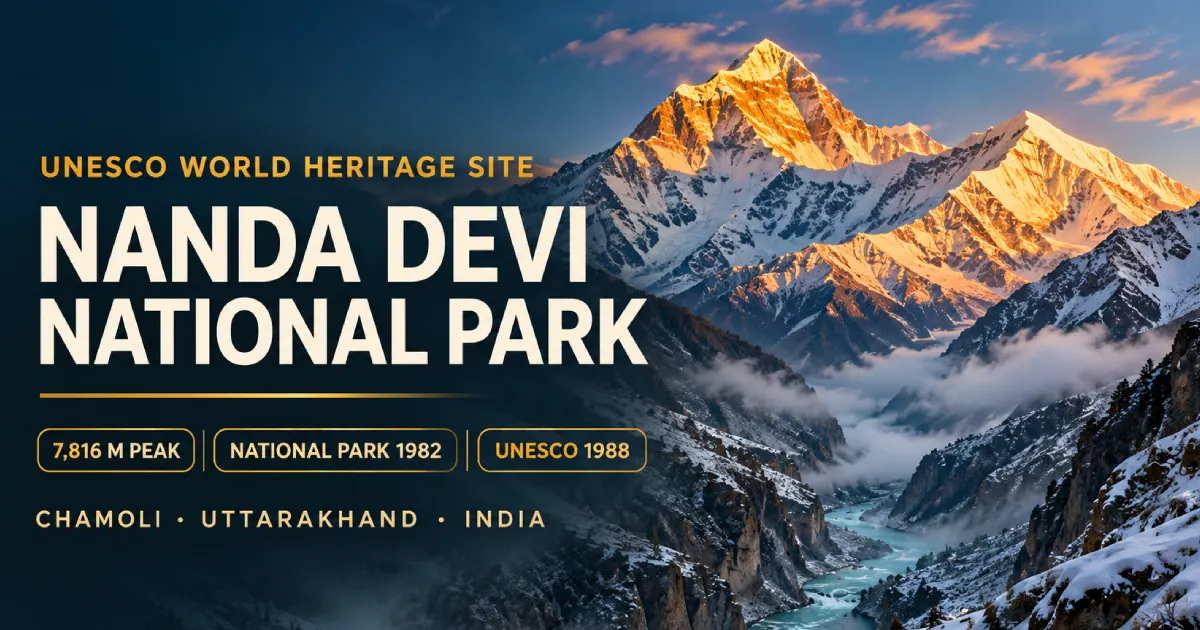
Nanda Devi National Park is a high-altitude park in Chamoli district, Uttarakhand, built around the 7,816 m Nanda Devi peak, the highest mountain that lies entirely inside India. It was declared a national park in 1982 and became a UNESCO World Heritage Site in 1988, and the Valley of Flowers was added to the same site in 2005. The park is the core of the Nanda Devi Biosphere Reserve, and its inner sanctuary can be entered only through the Rishi Ganga gorge. Mountaineering inside has been banned since 1983, so visitors today get only regulated treks in the outer areas.
What Is Nanda Devi National Park?
For years, climbers walked up to a wall of mountains and found no way through. Behind it lay a hidden basin, circled by peaks and cut open by just one river gorge. Explorers finally broke in during 1934. By then, people in Garhwal and Kumaon had been worshipping the mountain as a goddess for centuries.
That basin is the heart of Nanda Devi National Park, which lies in Chamoli district. It is one of the most strictly protected wild areas in the country. Here is what you should know before reading further.
- Location: Chamoli district, Garhwal Himalaya, Uttarakhand
- National park since: 1982
- Area: about 625 sq km (sources differ slightly, from about 625 to 630 sq km)
- Main peak: Nanda Devi, 7,816 m
- UNESCO World Heritage Site: since 1988, extended in 2005 to include the Valley of Flowers
- Known for: the Nanda Devi Sanctuary, the Rishi Ganga gorge, snow leopards, and a core closed to climbers since 1983
Where Is Nanda Devi National Park?
The park lies deep in the Garhwal Himalaya, in one of the districts you can find on our Uttarakhand district map. All of it sits above roughly 3,500 m. Lata and Reni are the villages at its edge, and Lata is where the permitted treks around the park begin. Joshimath is the nearest main town, on the road to Badrinath. We have written about that route in our guide to the Shri Badrinath Dham Temple.
Reni has its own place in history. In 1974, the village women, led by Gaura Devi, stood in front of the loggers’ axes and saved their forest. That protest became a part of the Chipko movement.
Nanda Devi Peak: The Mountain Behind the Park
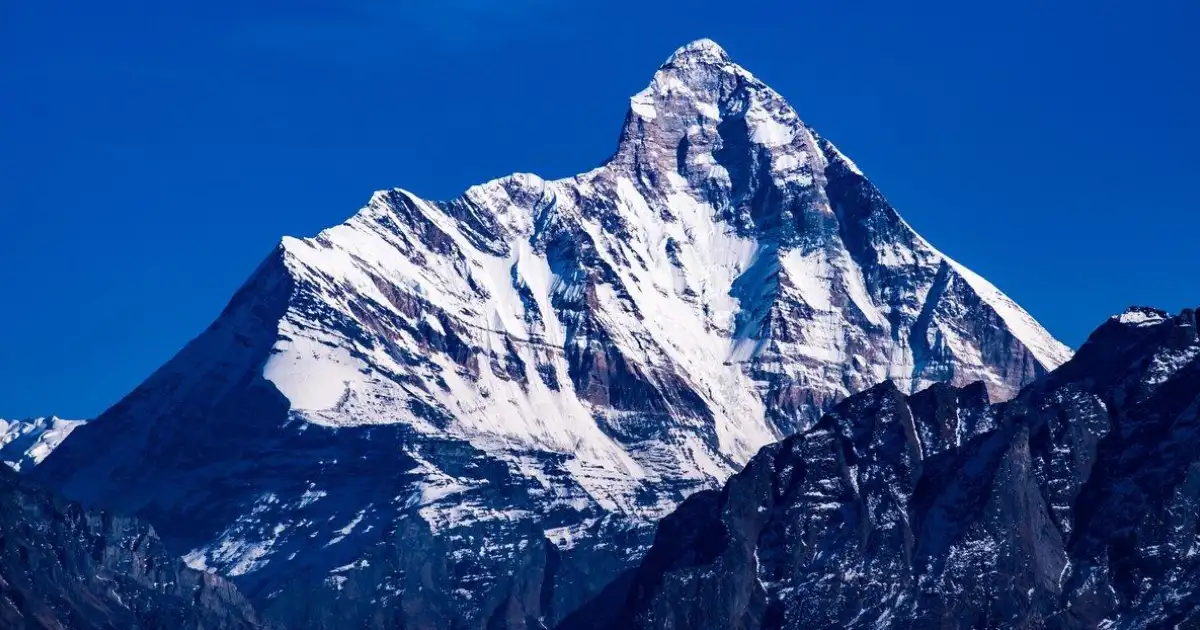
Nanda Devi rises to 7,816 m. Within India, only Kangchenjunga is higher, and that one sits on the Sikkim-Nepal border, so Nanda Devi is the tallest peak the country can claim entirely for itself. It has two summits: the main one at 7,816 m and Nanda Devi East at 7,434 m, about 2 km away along a high ridge.
To the people of the hills, the name means the goddess who gives bliss, and she is still worshipped that way. The first climbers to reach the top were Noel Odell and Bill Tilman, on 29 August 1936, during a British-American expedition. At that time, no one had stood on a higher mountain.
The Nanda Devi Sanctuary and the Rishi Ganga Gorge
The sanctuary is a glacial basin ringed by peaks of 6,000 to 7,500 m. The ring is almost unbroken, with one gap on the western side. That gap is the Rishi Ganga gorge, where the meltwater of the whole basin escapes, and UNESCO’s evaluators describe it as one of the most spectacular gorges in the world.
Expeditions in the 1920s and early 1930s tried to get in and failed. In 1934, Eric Shipton and H. W. Tilman, along with three Sherpa companions, Ang Tharkay, Pasang and Kusang, found a way through the gorge and reached the inner sanctuary. Tilman wrote about the journey in The Ascent of Nanda Devi.
History: From Game Sanctuary to World Heritage Site
- 1934: Shipton and Tilman enter the inner sanctuary through the Rishi Ganga gorge.
- 1936: Nanda Devi is climbed for the first time.
- 1939: The area is declared a game sanctuary.
- 1982: It becomes Nanda Devi National Park.
- 18 February 1983: Mountaineering and other activities in the sanctuary are banned under the Wild Life (Protection) Act, 1972, after years of damage from expeditions and grazing.
- 18 January 1988: The Nanda Devi Biosphere Reserve is established.
- 1988: The national park is inscribed on the UNESCO World Heritage List.
- 2005: The site is extended to include the Valley of Flowers National Park and renamed Nanda Devi and Valley of Flowers National Parks.
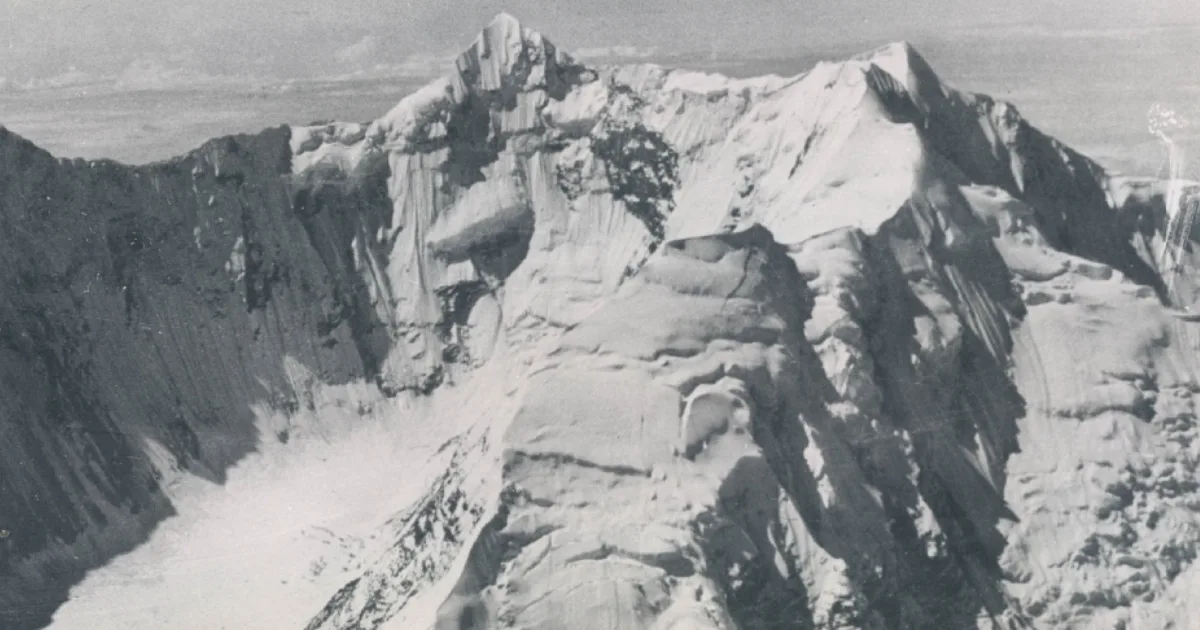
Nanda Devi Biosphere Reserve and the UNESCO Status
The national park is the core of the Nanda Devi Biosphere Reserve, which covers about 2,237 sq km. Around the World Heritage Site lies a much larger buffer zone, of more than 5,000 sq km. The Valley of Flowers sits roughly 20 km from the Nanda Devi core, and UNESCO treats the two as a pair: the soft alpine meadows of one balance the rugged mountain wilderness of the other.
So when people search for Nanda Devi and Valley of Flowers national parks, they are asking about one UNESCO site made of two parks, both in Chamoli district. Nanda Devi was valued for its mountain wilderness and threatened mammals, and the Valley of Flowers for its alpine flora. The full listing is on the UNESCO World Heritage Centre page for Nanda Devi and Valley of Flowers National Parks.
Wildlife in Nanda Devi National Park
Because the core has been left alone for so long, scientists use it as a reference point for how the Himalaya looks with very little human pressure. These are the mammals recorded here:
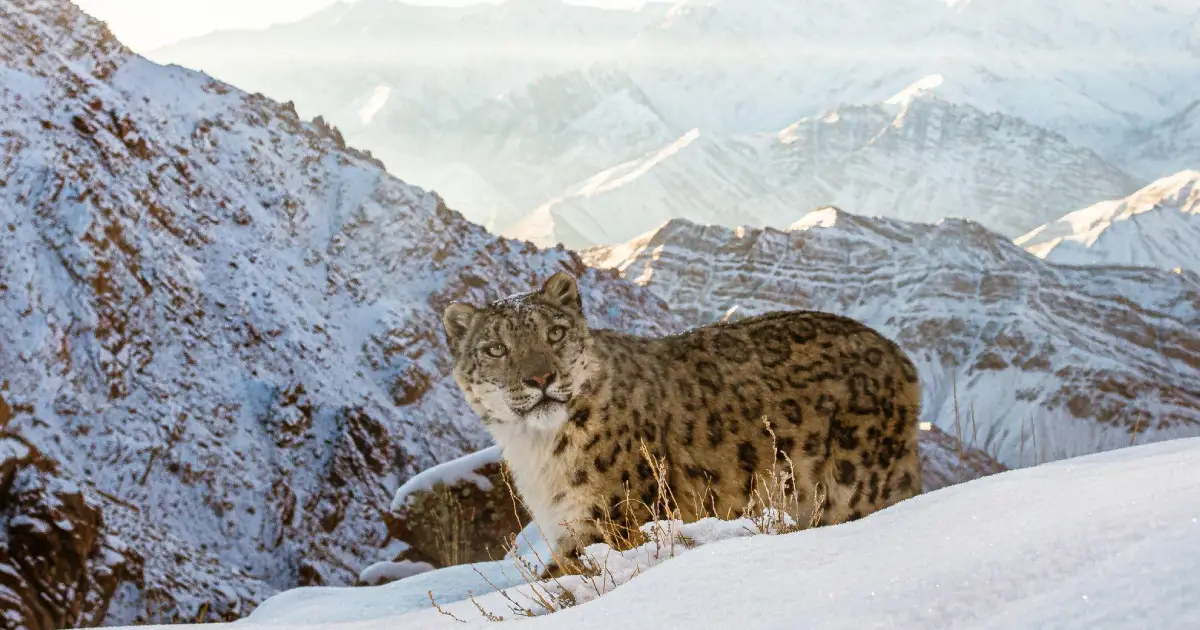
- Snow leopard: the top predator of the high crags and glaciers
- Himalayan musk deer, Himalayan tahr and bharal (blue sheep): the main prey animals of the high slopes
- Himalayan black bear: found in the lower forests, with the brown bear also reported
- Serow, goral and common langur: seen in the lower and middle parts of the park
Don’t expect a jeep safari here. There are no safari roads, and most sightings are left to researchers and forest staff.
Why Is Nanda Devi National Park Closed?
After 1934, expeditions kept arriving. Grazing, hunting, plant collection, firewood use and the rubbish left behind by climbing parties slowly damaged a basin that was fragile to begin with. The ban of February 1983 was the answer. UNESCO notes that, apart from small, well-regulated community-based ecotourism, the area has had almost no human pressure since then.
Can You Visit? Nanda Devi Trek and Permits
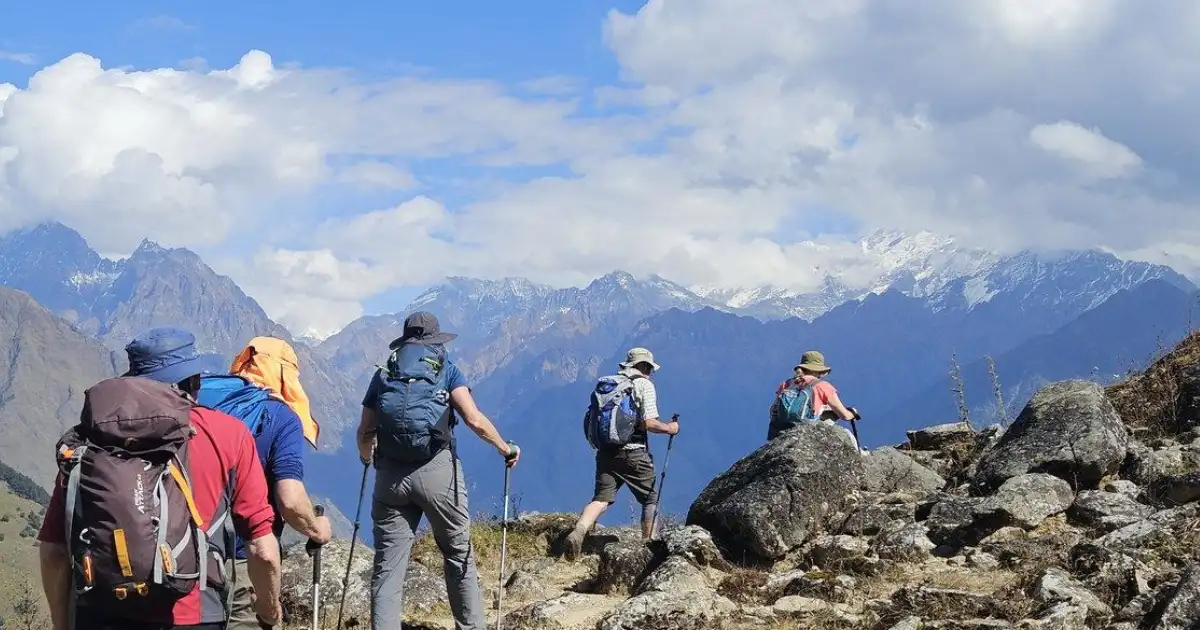
The inner sanctuary cannot be entered freely, and the mountain is closed to climbers. What stays open, in a limited and regulated way, are guided treks in the outer areas that start from Lata village. These are the routes people have in mind when they search for a Nanda Devi trek, and they usually run in the snow-free months, roughly May to October. You should expect to need a Forest Department permit and a registered guide, and the number of trekkers allowed is controlled.
Rules and routes can change from year to year, so confirm everything with the Forest Department in Chamoli before you plan. If you want an easier high-altitude trek with flowers, the neighbouring Valley of Flowers is the friendlier first choice, and it belongs to the same UNESCO site.
The Secret Mission of 1965
The mountain also has a Cold War story. In October 1965, the CIA and India’s Intelligence Bureau tried to place a nuclear-powered sensing device near the summit, to monitor Chinese missile tests. A blizzard caught the team near the upper camp, and on 16 October the leader decided to turn back, leaving the plutonium-powered generator behind. Later searches never found it. How much risk it poses is still uncertain.
Nanda Devi and the Chamoli Disaster
The Rishi Ganga valley was also the path of the February 2021 flash flood, which tore through Chamoli district and hit hydropower projects downstream. We covered the event in our guide to destructive flash floods in Uttarakhand.
Frequently Asked Questions
Where is Nanda Devi National Park located?
In Chamoli district, Uttarakhand, around the Nanda Devi peak in the Garhwal Himalaya.
When was Nanda Devi National Park established?
It was declared a national park in 1982. The area had been a game sanctuary since 1939.
How high is the Nanda Devi peak?
7,816 m. It is the highest mountain lying entirely within India.
Is Nanda Devi National Park a UNESCO World Heritage Site?
Yes. It was inscribed in 1988, and in 2005 the Valley of Flowers was added, so the site is now called Nanda Devi and Valley of Flowers National Parks.
What is the Nanda Devi Biosphere Reserve?
A protected area established on 18 January 1988, with Nanda Devi National Park as its core.
Why is Nanda Devi National Park closed to climbers?
Mountaineering and adventure activities were banned in 1983 because years of expeditions and grazing had damaged the fragile sanctuary.
Which animals live in Nanda Devi National Park?
Snow leopard, Himalayan musk deer, Himalayan tahr, bharal, Himalayan black bear, serow, goral and common langur have all been recorded.
Nanda Devi National Park shows what a place can look like when it is left alone. The rules are strict, and that is exactly why the sanctuary is still wild.
Facts, areas and dates in this guide were checked against UNESCO and IUCN World Heritage records and other published sources. Rules, permits and access can change, so please confirm them with the Uttarakhand Forest Department before you travel.