
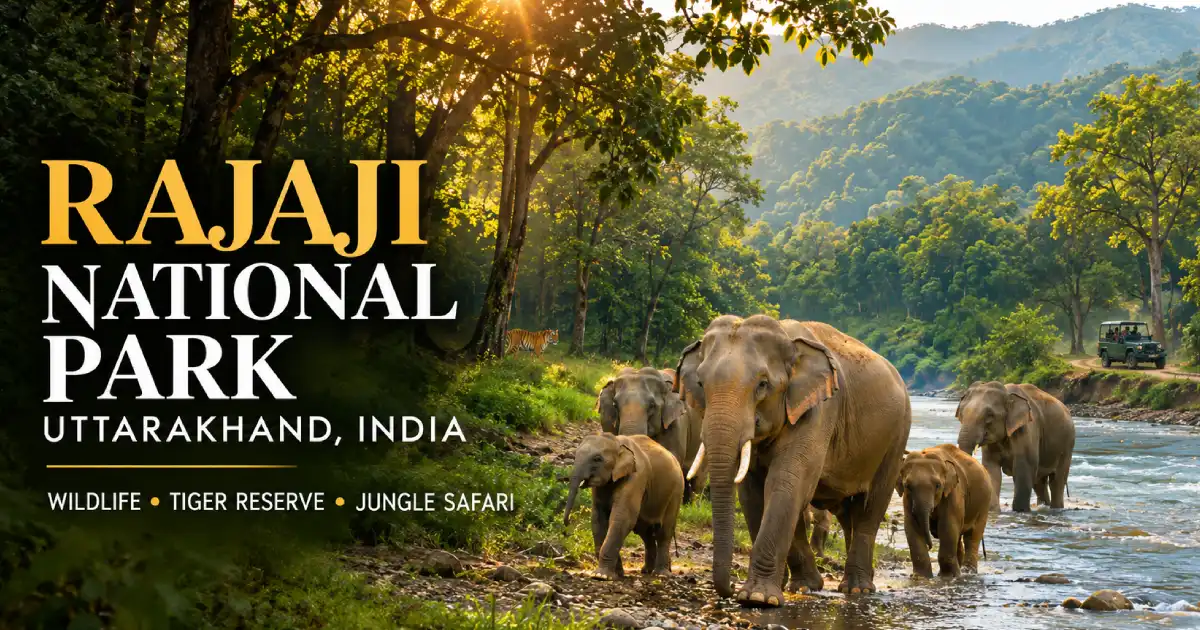
Rajaji National Park is a tiger reserve in the Shivalik foothills of Uttarakhand, spread across the Haridwar, Dehradun and Pauri Garhwal districts. It was created in 1983 by merging three sanctuaries named Rajaji, Motichur and Chilla, and in 2015 the park and its buffer forest together were declared the Rajaji Tiger Reserve, covering about 1,075 sq km. The Ganga flows through the middle of it, and the reserve is best known for its Asian elephants, along with tigers, leopards and roughly 315 bird species. Jungle safaris run from 15 November to 15 June, mainly through the Chilla, Motichur and Ranipur gates near Haridwar. Below you will find the history, safari zones, booking steps, ticket price, timings, and the best time to visit.
What Is Rajaji National Park?
Few wild places sit this close to so many people. Dehradun, Haridwar and Rishikesh, three of Uttarakhand’s best-known cities, are all within easy driving distance of its gates, and the forest still holds wild elephants, leopards and tigers. The reserve’s own website says the forest works as the lungs of those three cities.
The park sits in the Haridwar, Dehradun and Pauri Garhwal districts. It is the second tiger reserve of the state after Corbett and is commonly listed as the 48th in India. It is also one of the six parks in our guide to the national parks in Uttarakhand.
- Location: Haridwar, Dehradun and Pauri Garhwal districts, Uttarakhand
- National park area: 820.42 sq km
- Tiger reserve area: about 1,075 sq km, including buffer forest
- Sanctuary since: 1948, and national park since 1983
- Tiger reserve since: 2015
- Safari season: 15 November to 15 June
- Nearest airport: Jolly Grant, Dehradun
- Nearest railway stations: Haridwar, Rishikesh and Dehradun
Rajaji National Park History: From a Hunting Invitation to a Tiger Reserve
The park carries the name of C. Rajagopalachari, popularly called Rajaji, the freedom fighter who became the last Governor-General of India. A story told on the reserve’s own pages says he was invited to a hunt here, was so struck by the wildlife that he suggested a sanctuary instead, and that is how the Rajaji Sanctuary began in 1948.
- 1948: Rajaji Wildlife Sanctuary is created.
- 1964: Motichur Wildlife Sanctuary is created.
- 1977: Chilla Wildlife Sanctuary is created.
- 1983: The three sanctuaries are merged, and an intent notification is issued for Rajaji National Park over 820.42 sq km.
- 2015: About 255.63 sq km of adjoining reserve forest is added as a buffer, and the whole 1,075 sq km is declared the Rajaji Tiger Reserve.
Where Is Rajaji National Park? (Haridwar, Dehradun and Rishikesh)
It is in Uttarakhand, along the Shivalik hills, and the reserve is reached from Haridwar, Rishikesh, and Dehradun. The Ganga cuts through the park, so the Rajaji and Motichur parts lie on the west bank and the Chilla part lies to the east. If you are searching for Rajaji National Park in Dehradun or Haridwar, both are correct: the reserve spreads over both districts, and which one you use as a base depends on the gate you want.
- Haridwar side: Chilla, Motichur, Ranipur, and Jhilmil Jheel are the zones people usually book. The Chilla range can be reached from Haridwar on NH 58, just after the long bridge over the Ganga.
- Dehradun side: the Mohand (Chillawali) gate lies on the Dehradun side of the reserve. Our Dehradun location and travel guide shows how the city connects to the rest of the state.
- Rishikesh side: Rishikesh is one of the nearest railway stations, and the Chaurasi Kutia site, better known as the Beatles Ashram, is a part of the reserve. The Beatles stayed here in 1968.
You can see how these districts fit together on our Uttarakhand district map.
Forests and Landscape
The reserve lies along the hills and foothills of the Shivalik range, where the Indo-Gangetic plain meets the Himalayan outer ranges. Sal trees dominate most of it, and around them you find riverine forest, broad-leaved deciduous forest, grassland and, on the higher ridges, chir pine. Because it sits where the western and central Himalaya meet, the species list is longer than you would expect for its size.
Wildlife in Rajaji National Park
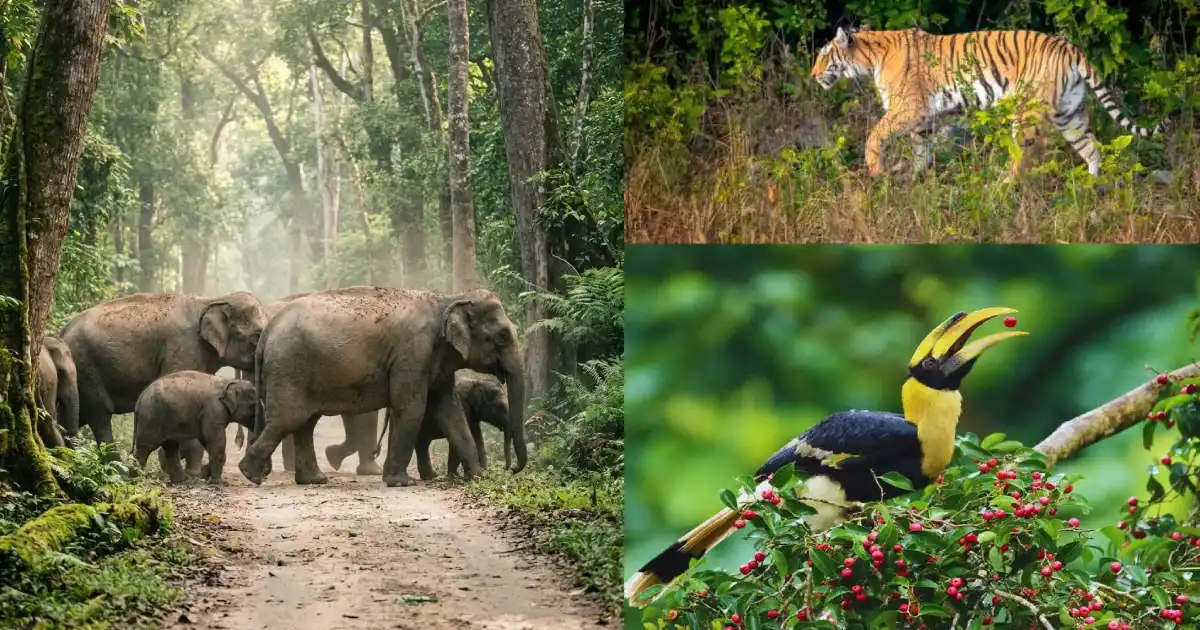
Asian elephants and tigers are the headline animals, but there is a lot more underneath them. The reserve’s own list includes:
- Big cats and other predators: tiger, leopard, jungle cat and striped hyena
- Bears: Himalayan black bear and sloth bear
- Deer and other grazers: sambar, spotted deer, barking deer, goral and wild boar
- Primates: Hanuman langur and rhesus macaque
- Reptiles: king cobra, Indian cobra, python, common krait and monitor lizard
Bird watchers have plenty to look for as well, with around 315 species recorded, from peafowl and red junglefowl to hornbills and migratory ducks in winter. In the Chilla range alone, the Forest Department says you can see three species of hornbill, nine species of woodpecker, five species of barbet and four species of kingfisher.
Corbett Tigers Are Moving to Rajaji
Rajaji has its own tiger story, and it involves its neighbour. In 2020, five tigers, two males and three females, were moved from Corbett to Rajaji to build up the tiger population here. In September 2026, the director of Corbett Tiger Reserve said that the National Tiger Conservation Authority had approved a second phase, in which one male and four females will be shifted, and that preparations had already begun. The tigers are to be chosen from areas of rising conflict with people.
Rajaji National Park Jungle Safari: The Zones
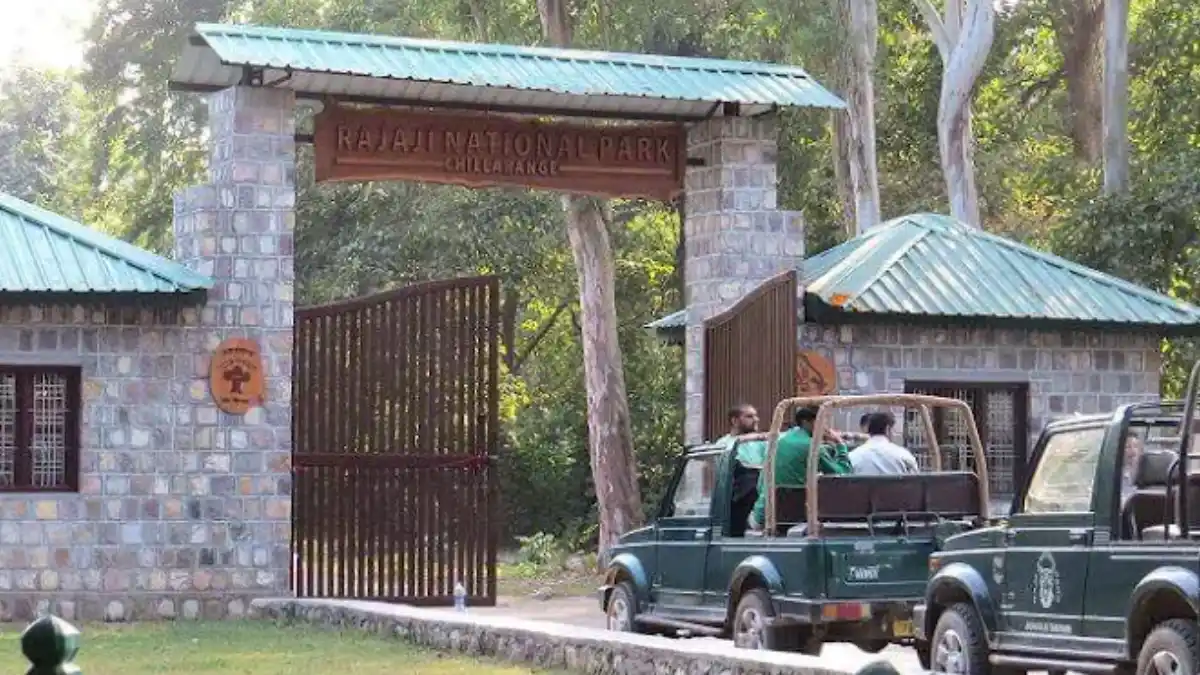
Day visits are done in open jeeps. The Forest Department’s site says a vehicle can carry six to seven adults. Each zone has a different mood:
- Chilla: the best-known track, about 36 km long, passing through sal forest, grassland, and the Ganga riverbank. It is the zone where visitors most often hope for tigers, leopards, and elephants, and it also offers elephant safaris.
- Motichur: the gate lies off NH 58 between Haridwar and Rishikesh. The forest here is dense, so animals are harder to spot.
- Ranipur: another Haridwar-side gate, open this season alongside Chilla and Motichur.
- Jhilmil Jheel: a conservation reserve with wetland habitat, known for swamp deer and for winter birds.
- Mohand (Chillawali): the Dehradun-side zone.
- Chaurasi Kutia (Beatles Ashram): not a safari but a walking visit, and it stays open through the year.
When the 2026-27 season began on 15 November, news reports said that three zones, Chilla, Motichur and Ranipur, had reopened, and that every safari vehicle in Chilla was booked on the opening day. Check the portal for the other zones before you plan around them.
Rajaji National Park Safari Booking: How to Book
Book through the Forest Department’s own website. Many sites with “Rajaji” in the name are private tour operators and say so in their fine print, so look for the gov.in address. The department’s day-visit booking page lays out the steps:
- Pick your visit date from the calendar.
- Choose the zone from the list.
- Choose the morning or evening shift.
- Enter the details of the visitors, including a group leader.
- Pay online, and the day-visit ticket is booked.
- Print the permit and carry it with you.
The department’s site also says visitors can book the safari vehicle at the relevant gate. Since Chilla filled up on day one this season, it makes sense to book early, especially for weekends and winter holidays.
Rajaji National Park Ticket Price
The cost of a jungle safari here has three parts. First comes the entry ticket per person, which the official tariff lists at ₹150 for Indian visitors and ₹600 for foreign visitors. Second is a government fee for the vehicle. Third is the jeep hire itself, which is charged by the vehicle owner and depends on the length of the track. The Beatles Ashram visit is ticketed separately, at ₹150 per Indian visitor and ₹600 per foreign visitor.
Totals change with the zone, the number of people, and the vehicle, so check the final amount on the portal at the time of booking instead of relying on a number from a blog.
Safari Timings
On the Forest Department’s site, morning entry is listed as 6 AM to 10 AM and evening entry as 2 PM to 6 PM. A trip usually lasts two to three hours, depending on sunrise and sunset, and day visits before sunrise or after sunset are strictly prohibited. The entry windows get narrower in winter. This season’s reports say that from 15 November to 15 February, tourists may enter between 6:30 AM and 8 AM and between 1:30 PM and 3 PM, and must leave the forest within the stipulated time. Always check the timing printed on your own permit.
Best Time to Visit Rajaji National Park
The park is open for day visits from 15 November to 15 June and is closed from 16 June to 14 November. Winter is the popular stretch, and Chilla fills up on the very first day of the season. Spring and early summer are warmer. The Forest Department lists October to February as winter and March to June as summer for the Haridwar area.
If you want to see tigers, remember that a sighting is never guaranteed in any forest. Go for the whole experience: elephants near the water, deer in the grass, and birds along the Ganga.
How to Reach Rajaji National Park
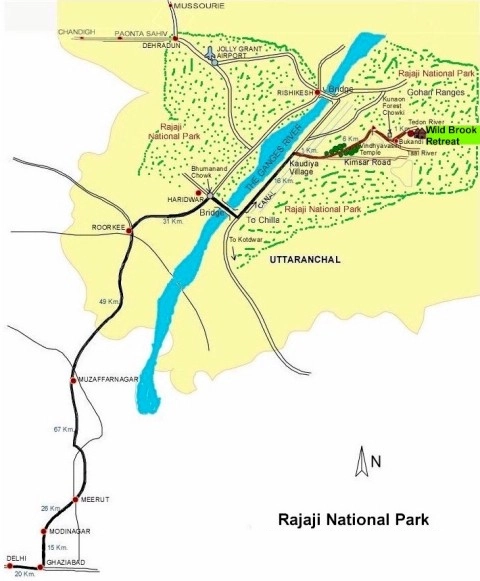
The Forest Department gives these road distances to the Chilla gate: about 224 km from Delhi, about 55 km from Dehradun, and about 40 km from Jolly Grant airport. Haridwar, Rishikesh, and Dehradun are the nearest railway stations, and Jolly Grant at Dehradun is the nearest airport. By road, the reserve can be reached from Delhi, Meerut, Roorkee, Haridwar, Rishikesh, Mussoorie, Dehradun and Chandigarh, among other places.
Where to Stay
The reserve has forest rest houses at Chilla, Motichur, Lalitaro, Kunao and Ranipur. Most visitors, though, base themselves in Haridwar, Rishikesh or Dehradun, where there are many hotels, and then drive to the gate on the morning of the safari. Remember that your safari permit has to be booked separately on the official portal.
Things to Remember Before You Go
- Enter only within your slot, and leave the forest within the time allowed.
- Carry your printed permit and a valid photo ID to be safe.
- Keep to the group size of the vehicle, which is six to seven adults.
- Check the portal for zone openings, fees, and timings, because they can change between seasons.
Frequently Asked Questions
Where is Rajaji National Park?
In Uttarakhand, across the Haridwar, Dehradun and Pauri Garhwal districts, in the Shivalik foothills.
Is Rajaji National Park a tiger reserve?
Yes. It was declared the Rajaji Tiger Reserve in 2015, and it is the second tiger reserve in Uttarakhand after Corbett.
When does Rajaji National Park open?
For day visits, it opens on 15 November and closes on 15 June. The Chaurasi Kutia (Beatles Ashram) site stays open throughout the year.
How do I book a jungle safari in Rajaji National Park?
Choose a date, zone, and shift on the Forest Department’s official booking page, enter the visitor details, pay online, and print the permit. The department also says the vehicle can be booked at the relevant gate.
What is the Rajaji National Park ticket price?
The entry ticket is ₹150 per person for Indian visitors and ₹600 for foreign visitors on the official tariff. A vehicle fee and the jeep hire are charged on top, so confirm the total on the portal.
Which is the best zone for a jungle safari?
Chilla is the best-known and the most popular, with a track of about 36 km. Which zone suits you depends on what you want to see and how close you are staying.
Is Rajaji National Park near Rishikesh?
Yes. Rishikesh is one of the nearest railway stations, and the Chaurasi Kutia (Beatles Ashram) site in Rishikesh belongs to the Rajaji Tiger Reserve.
Rajaji may not have the fame of Corbett, but the Shivalik forest has its own pull: elephants beside the Ganga, a tiger population being rebuilt, and a safari season that has just opened. Book early, stay within your slot, and let the forest do the rest.
Facts, areas, and dates in this guide were checked against the Rajaji Tiger Reserve’s official Forest Department website and recent news reports from ETV Bharat. Fees, timings, and zone openings can change, so please confirm them on the official portal before you travel.