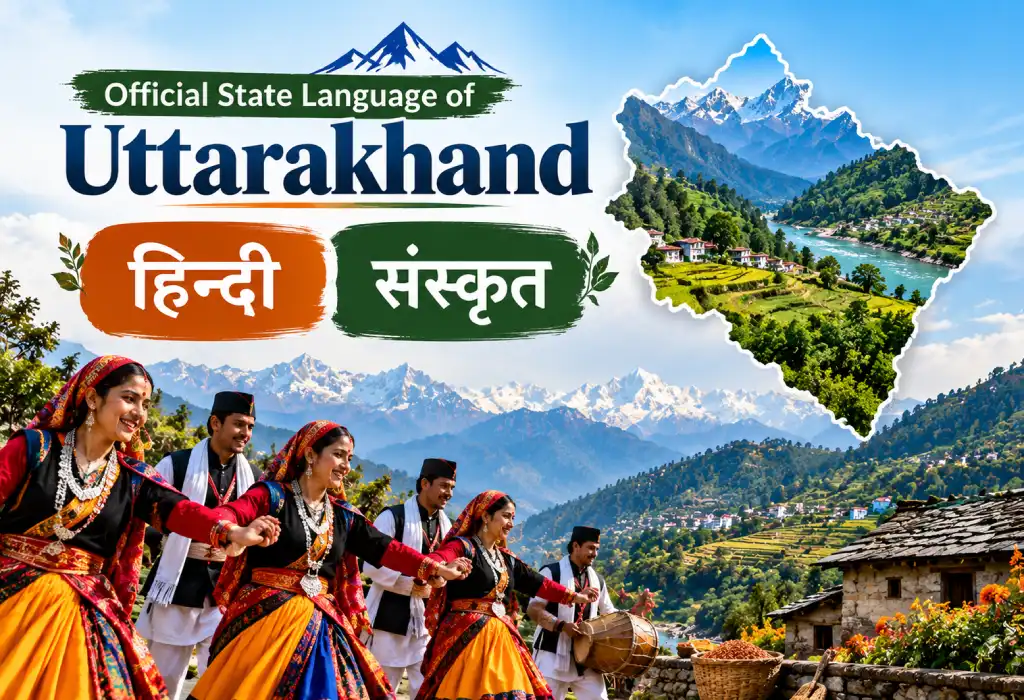
Official State Language of Uttarakhand:
The official state language of Uttarakhand is Hindi. Sanskrit is the second official language. That is the quick answer. But the story does not end there. The hills are full of local languages and tribal tongues, and each one has a rich past.
This guide explains every major language in simple words. You will also learn which tribal groups live in the state and what they speak.
Official State Language of Uttarakhand: The Short Answer
Uttarakhand has two official languages:
- Hindi: the first official language. Government offices, courts, schools and media use it daily.
- Sanskrit: the second official language. The state gave it this status in 2010. Uttarakhand became the first Indian state to do so.
The official state language of Uttarakhand, Hindi, is written in the Devanagari script. It also works as the common link language. A person from Pithoragarh and a person from Haridwar can talk easily in Hindi, even if their home languages differ.
Why Did Uttarakhand Pick Sanskrit?
People call Uttarakhand Dev Bhoomi, the land of gods. Haridwar, Rishikesh, Kedarnath and Badrinath are tied to old Sanskrit texts and rituals. Many sages wrote and taught in Sanskrit here.
So the state chose to protect this link. Sanskrit became the second official state language of Uttarakhand, and it now gets support through schools, colleges and cultural programs. However, very few people use it in daily talk. It stays mostly a language of study, prayer and ceremony.
Which Language Is Spoken in Uttarakhand?
Hindi is the official state language of Uttarakhand, and it is also the most widely spoken language in the state. Still, most people grow up speaking a local language at home. They then switch to Hindi at work, school or the market.
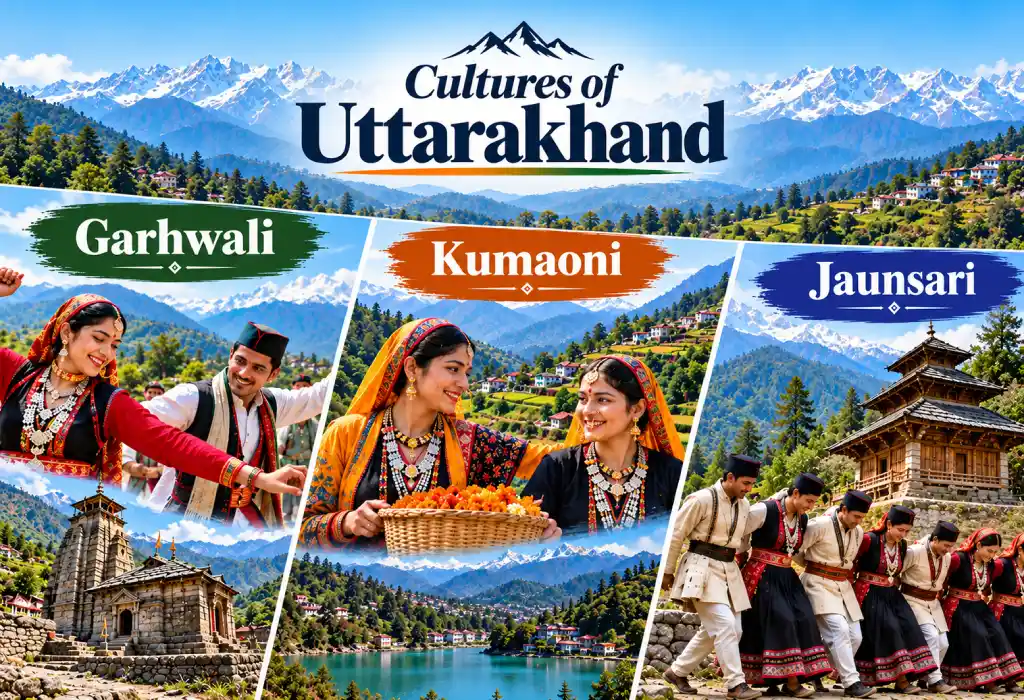
The three big regional languages are:
- Garhwali: spoken in the Garhwal region, including Pauri, Tehri, Chamoli and Rudraprayag.
- Kumaoni: spoken in the Kumaon region, including Almora, Nainital, Bageshwar and Pithoragarh.
- Jaunsari: spoken in the Jaunsar-Bawar area near Chakrata in Dehradun.
Garhwali and Kumaoni belong to the Central Pahari group. Each has more than two million speakers. Both have folk songs, tales and poems that pass from one generation to the next. Yet neither is in the Eighth Schedule of the Constitution. Writers and locals have asked for this status for years.
How Do People Speak Garhwali, Kumaoni and Jaunsari?
A simple example shows the difference. Here is how people in two regions ask, “What is your name?”
- Garhwali (Pauri, Tehri, Chamoli): “Tumaro naam kya chha?”
- Kumaoni (Almora, Bageshwar, Pithoragarh): “Tumar naam ke chha?”
Both lines sound close to Hindi, but the small words and endings change. The word “chha” at the end of a sentence is a common sign of hill speech.
Jaunsari is spoken in Jaunsar-Bawar. It is close to Garhwali, but it has its own words and sounds. People from nearby Garhwal areas often find it hard to follow at first.
Spelling and words change from valley to valley, so these lines are only simple examples.
How Many Languages Are There in Uttarakhand?
No official count exists. Only Hindi and Sanskrit hold the status of official state language of Uttarakhand. Experts count languages and dialects in different ways. Still, Uttarakhand has around a dozen languages and many dialects.
Here are some of the common ones:
- Hindi
- Sanskrit
- Garhwali
- Kumaoni
- Jaunsari
- Bhotia (several varieties)
- Tharu
- Buksa
- Raji
- Punjabi
- Nepali
- Urdu
Dialects add more variety. A word used in one valley may change in the next.
Tribal Languages of Uttarakhand
Uttarakhand has five main tribal groups listed as Scheduled Tribes. Each group keeps its own language and customs.
| Tribe | Main Area | Language |
|---|---|---|
| Jaunsari | Jaunsar-Bawar, Dehradun | Jaunsari |
| Bhotia | High valleys of Chamoli, Pithoragarh and Uttarkashi | Bhotia languages (Rongpa, Marchha, Tolchha, Jad, Shauka) |
| Tharu | Terai belt of Udham Singh Nagar | Tharu |
| Buksa | Terai and foothill areas of Garhwal and Kumaon | Buksa |
| Raji | Mainly Pithoragarh and nearby areas | Raji |
Jaunsari Tribe
The Jaunsari people are known for their colorful festivals and folk dances. Their language, Jaunsari, is close to Garhwali and belongs to the Pahari group.
Bhotia Tribe
The Bhotia people live near the Tibet border and once traded across the Himalayas. Their languages mostly belong to the Tibeto-Burman family. Each valley has its own variety.
Tharu Tribe
The Tharu people live in the flat Terai lands. Their language shares many words with Hindi and nearby languages. Farming and forest life shape their songs and sayings.
Buksa Tribe
The Buksa people live in the Terai and foothill areas. Younger Buksa people now use Hindi more often, so their own language faces pressure.
Raji Tribe
The Raji people are also called Van Rawat. They have lived in forests for generations. Their language is endangered, and only a small number of people still speak it.
Why Protecting These Languages Matters
A language carries stories, farming tips, songs and local knowledge. When a language fades, that knowledge fades too.
Many young people move to cities and pick up Hindi or English. As a result, tribal and local languages lose speakers every year.
You can help in simple ways:
- Speak your mother tongue at home.
- Teach children local songs and stories.
- Support local writers, radio and films.
- Record elders who know old words and sayings.
Why Hindi and Local Languages Together Define Uttarakhand
The official state language of Uttarakhand is Hindi, with Sanskrit as the second official language. Still, Garhwali, Kumaoni, Jaunsari and the tribal languages give the state its true voice. Together, they show the deep culture of the Himalayas. Keeping them alive keeps that culture alive.
Read more about Uttarakhand: Uttarakhand district map, destructive flash floods in Uttarakhand, the Monal, the Himalayan bird, what is the capital of Uttarakhand, how many districts are in Uttarakhand and the Uttarakhand slogan.