What Is Uttarakhand Old Name? Full History and Reason for the Change
- Written by: UKSports
- Published on:
- 5 min
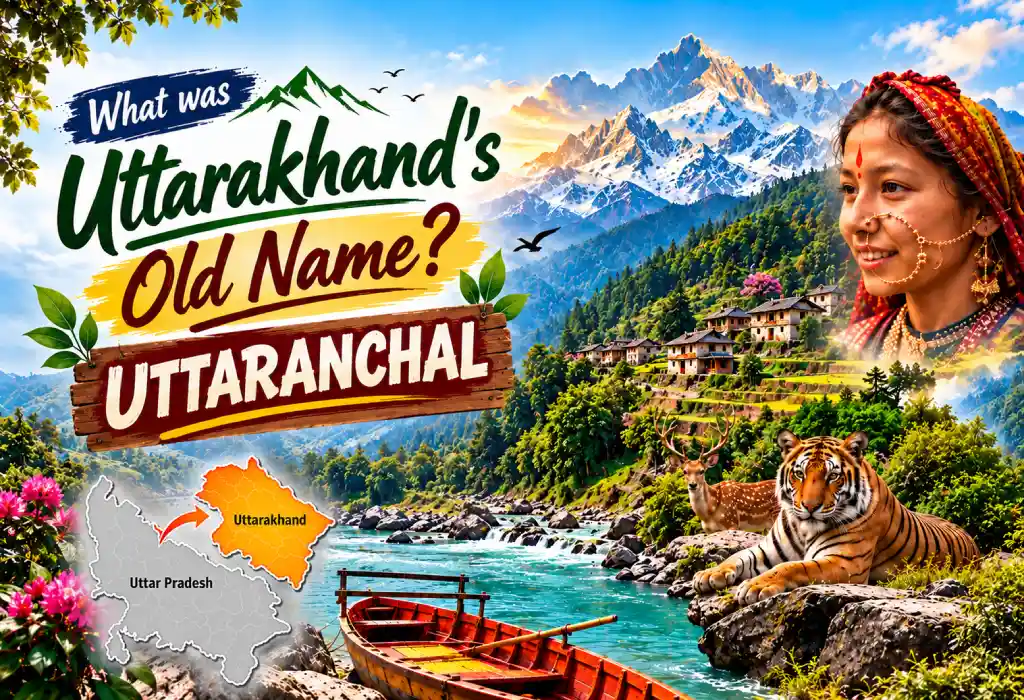
Table of Contents
What is Uttarakhand old name?
If you are wondering what is Uttarakhand old name, the short answer is Uttaranchal. Most people know only that one word, but the full story is far more interesting. For six years, the state was called Uttaranchal. It carried that name from 9 November 2000 to 31 December 2006. Then, on 1 January 2007, it got back the name its people had demanded for decades: Uttarakhand.
Behind this one change are ancient Himalayan names, a powerful statehood movement and a law passed by Parliament. Let’s go through the story step by step.
Quick Answer: What Is Uttarakhand Old Name?
- Old name: Uttaranchal
- Used from: 9 November 2000
- Changed to Uttarakhand on: 1 January 2007
- Ancient names: Kedarkhand, Manaskhand, Brahmapura
- Created from: Uttar Pradesh
- Rank among states: 27th state of India
What Does the Name Uttarakhand Mean?
Before we go deeper into what is Uttarakhand old name, let us understand the word itself. The word comes from Sanskrit. “Uttara” means north. “Khanda” means land or region. So Uttarakhand simply means “the northern land.”
“Uttaranchal” has a similar meaning. “Anchal” means a region or a border area. Both names point to the same Himalayan region in northern India.
What Is Uttarakhand Old Name in Ancient Times?
Long before 2000, the region had other names. Ancient Hindu texts, especially the Skanda Purana, split the Himalayan hills into two parts:
- Kedarkhand: the Garhwal region
- Manaskhand: the Kumaon region
Together, these two areas form modern Uttarakhand. Both names are still used in religious and cultural talks today.
Brahmapura
Some scholars link the region to a kingdom called Brahmapura. The Chinese traveller Xuanzang (Hiuen Tsang) wrote about it in the 7th century. Historians often connect it with the hill region of today’s Uttarakhand, though experts still discuss its exact location.
Kurmanchal and Garhwal
The Kumaon region was once called Kurmanchal. The name comes from the Kurma avatar, the tortoise form of Lord Vishnu. Over time, the name changed into “Kumaon.”
The Garhwal region got its name from “garh,” which means fort. Many small forts once dotted these hills.
Rulers Who Shaped the Region
Different dynasties ruled these hills over the centuries:
- Katyuri rulers governed large parts of Kumaon and Garhwal in the early medieval period.
- Chand dynasty ruled Kumaon.
- Panwar (Parmar) dynasty ruled Garhwal.
- Gorkhas took over Kumaon in 1791 and Garhwal in 1803. Their rule lasted until 1815.
- British gained control after the Anglo-Nepal War. The Treaty of Sugauli, ratified in 1816, followed.
After the war, the Tehri Garhwal princely state was re-established around 1815–16. The rest of the hills came under British rule.
From United Provinces to Uttar Pradesh
Under the British, the hill region belonged to the United Provinces. After independence, the Tehri state merged with India in 1949. The United Provinces became Uttar Pradesh in 1950. The hills stayed inside this large state for the next 50 years.
The Demand for a Separate State
People in the hills felt left behind. Roads, schools and jobs were limited. Their needs often got lost in the big state’s politics.
The demand grew stronger over time:
- Political groups like the Uttarakhand Kranti Dal (formed in 1979) pushed for a new state.
- The movement became intense in the early 1990s.
- On 1 and 2 September 1994, police fired on protesters in Khatima and Mussoorie.
- On 1–2 October 1994, police firing at Rampur Tiraha in Muzaffarnagar shocked the country. Many protesters died.
These events became a turning point in the struggle.
How Uttaranchal Came Into Existence
To fully understand what is Uttarakhand old name, you need to know how the state began. Parliament passed the Uttar Pradesh Reorganisation Act in 2000. As a result, the new state was formed on 9 November 2000. It became the 27th state of India.
The government chose the name Uttaranchal at that time. Many local people, however, had always used “Uttarakhand” during the movement. They felt the new name did not match their identity.
Why Was Uttaranchal Renamed Uttarakhand?
Once you know what is Uttarakhand old name, the next question is why it changed. The name change had a few clear reasons:
- Public sentiment: People had fought for “Uttarakhand,” not “Uttaranchal.”
- Historical roots: “Uttarakhand” appears in old texts and local tradition.
- Cultural identity: The new name felt closer to the region’s heritage.
The state government sent the proposal to the Centre. Parliament then passed the Uttaranchal (Alteration of Name) Act, 2006. The new name took effect on 1 January 2007.
How Parliament Changed the Uttarakhand Old Name
The name of the state was changed by the Parliament of India. The decision came from strong public demand by local people and statehood movement activists. The process followed clear legal steps.
Under Article 3 of the Constitution, Parliament can change the name of a state. Before that, the President must send the bill to the state legislature to get its views. This is why the state had to agree first.
Step 1: State Assembly Agrees
The state government was then led by Chief Minister Narayan Datt Tiwari (Congress). The Uttaranchal Legislative Assembly gave its approval and requested the change in October 2006.
Step 2: Centre Brings the Bill
The Union Government, led by Prime Minister Manmohan Singh, accepted the Assembly’s request. The Uttaranchal (Alteration of Name) Bill, 2006 was introduced in the Lok Sabha on 4 December 2006.
Step 3: Parliament Passes the Bill
Both Houses of Parliament passed the bill during the winter session:
- Lok Sabha: passed it on 5 December 2006.
- Rajya Sabha: passed it on 7 December 2006.
Step 4: President Gives Assent
President Dr. A.P.J. Abdul Kalam signed the bill on 21 December 2006. It became Act No. 52 of 2006. You can read the full text of the Uttaranchal (Alteration of Name) Act, 2006 on PRS India.
Step 5: New Name Comes Into Force
The Central Government issued a notification on 29 December 2006. It fixed 1 January 2007 as the date. From that day, the name Uttarakhand became official.
Uttarakhand Old Name vs New Name: Quick Comparison
Still unsure what is Uttarakhand old name and how it differs from the new one? This quick comparison makes it clear.
Uttaranchal (Old Name)
- Used during: 2000–2006
- Meaning: Northern region
- Basis: Official choice at creation
- Status: Old name
Uttarakhand (New Name)
- Used during: 2007 to today
- Meaning: Northern land
- Basis: Public demand and history
- Status: Current official name
Other Names for Uttarakhand
Now you know what is Uttarakhand old name. But you may also hear these terms:
- Devbhoomi: meaning “Land of the Gods.” Many holy sites like Kedarnath, Badrinath, Gangotri and Yamunotri are here.
- Kedarkhand and Manaskhand: the old regional names we saw above.
Devbhoomi is a nickname, not an official name.
Key Takeaways
If you want to remember what is Uttarakhand old name, keep this simple timeline in mind:
- Ancient times: Kedarkhand and Manaskhand
- 1950–2000: Part of Uttar Pradesh
- 2000–2006: Uttaranchal
- 21 December 2006: President signs the name change Act
- 2007 onwards: Uttarakhand
Uttarakhand Old Name: The Final Answer
So, what is Uttarakhand old name? The answer is Uttaranchal. But the region’s naming story goes back to ancient Kedarkhand and Manaskhand. The return to “Uttarakhand” in 2007 reflected what the people wanted all along.
Next time someone asks what is Uttarakhand old name, you will know both the short answer and the full history.
Read more about Uttarakhand: Uttarakhand district map, destructive flash floods in Uttarakhand, the Monal, the Himalayan bird, what is the capital of Uttarakhand, how many districts are in Uttarakhand, Dehradun in India map, the official state language of Uttarakhand, Uttarakhand population, the pin codes of Uttarakhand and the Uttarakhand slogan.